
Is VOO-Only Investing Like Eating Only Chicken Breast? 3 Steps to Build a Balanced Lazy Portfolio
In this article, you'll learn:
Everywhere you look online, someone’s shouting “Just mindlessly buy VOO and retire on it” — as if not buying VOO ETF means you don’t understand investing. And it really is great: 0.03% expense ratio, 10–12% average annual returns over the long term, growing alongside the 500 strongest companies in America. Hard to argue with.
But honestly, every time I see someone yelling “All-in”, I can’t help thinking: “Bro, are you really going to eat nothing but chicken breast for every single meal?”
VOO is like chicken breast — high protein, low fat, genuinely excellent. But if that’s all you eat, your portfolio is going to be nutritionally deficient.
This post will show you how to take that quality chicken breast called VOO and turn it into a well-balanced, lazy-person investment meal that lets you sleep at night.
Info
💡 Want to learn more about VOO investment strategies? Visit the VOO Investment Knowledge Hub for complete VOO resources from beginner to advanced!
Core Concepts: What’s on Your Investment Plate?
Before we dig in, let’s get familiar with the basic ingredients on the plate. They’re not complicated at all:
- Asset Allocation: The technical term for “don’t put all your eggs in one basket.” Spread your money across different things (stocks, bonds) so that if one drops, another might rise — keeping your heart from riding a rollercoaster. For a deeper dive into asset allocation principles, read: The 2 Key Points of Asset Allocation.
- VOO (U.S. S&P 500 ETF): This is your main course — the “chicken breast.” Buying it is like buying a slice of Apple, Microsoft, Amazon, and America’s top 500 companies all at once, growing alongside the U.S. economy.
- Global Diversification: Your plate can’t only have American chicken breast. Add some “European vegetables” and “Asian rice”! That means investing in non-U.S. stocks (like the ETF VXUS), so when the U.S. market sneezes, your portfolio doesn’t catch pneumonia.
- Stock/Bond Balance: Stocks are like a sports car — fast but bumpy. Bonds (like the ETF BND) are like the suspension on an SUV, smoothing out the ride. When stocks crash, bonds tend to hold steady.
Want to understand the key characteristics of VOO, VXUS, BND, and more popular ETFs? Check out: VOO, QQQ, VT — Which One to Choose? A Guide to 10 Popular ETFs.

How to Do It: Three Steps to Mix Your Lazy Nutrition Plan
Alright, concepts covered — let’s get hands-on. Building your own investment portfolio takes just three simple steps.
Step 1: Assess Your Risk Appetite
- Why it matters: Your age and financial goals determine how much heat (risk) your meal can handle.
- How to do it: Ask yourself: “What is this money for? When will I need it?” If it’s a retirement fund 30 years away, you can handle more spice. If it’s a down payment you need in 3 years, keep it mild.
- Measurable checkpoint: Write on a piece of paper: “My main goal is __, and I plan to use it in ____ years.”
Step 2: Decide Your Main Portion Size (Stock/Bond Ratio)
- Why it matters: This is the key control knob for the stability of your entire portfolio. More stocks means faster growth but more turbulence; more bonds means steadier but slower progress.
- How to do it: Beginners can use a super simple formula: “110 minus your age = stock percentage (%)”. For example, if you’re 30, stocks can be 80% and bonds 20%.
- Measurable checkpoint: Based on your age, calculate your personal stock/bond golden ratio.
Step 3: Add Your Side Dishes (Global Diversification)
- Why it matters: If you only eat American chicken breast and the U.S. market underperforms for a decade (it’s happened before!), you’ll be stuck.
- How to do it: Allocate 20%–40% of your stock portion to non-U.S. market ETFs, like VXUS.
- Measurable checkpoint: Decide your VOO vs. VXUS ratio — for example, “80% VOO + 20% VXUS” within the stock portion.
Examples and Tables: The Lazy Investor’s Meal Kit Reference
Before you start copying this homework, I need to be clear: there’s no single right answer!
Your perfect allocation depends on the life you want to live, your age, and your family situation. This menu is just a starting point to give you direction.
Tip
Chef’s Note: This menu is for reference only. The real perfect ratio is whatever you feel most comfortable with — the one you can actually stick to over the long term!
| Meal Name | Sprint & Gain (Aggressive) | Balanced Nutrition (Moderate) | Slow & Steady (Conservative) |
|---|---|---|---|
| Who’s it for? | Under 30, high risk tolerance | 30–50, steady career growth | 50+, approaching or in retirement |
| Main (VOO) | 60% | 45% | 30% |
| Sides (VXUS) | 20% | 15% | 10% |
| Fiber (BND) | 20% | 40% | 60% |
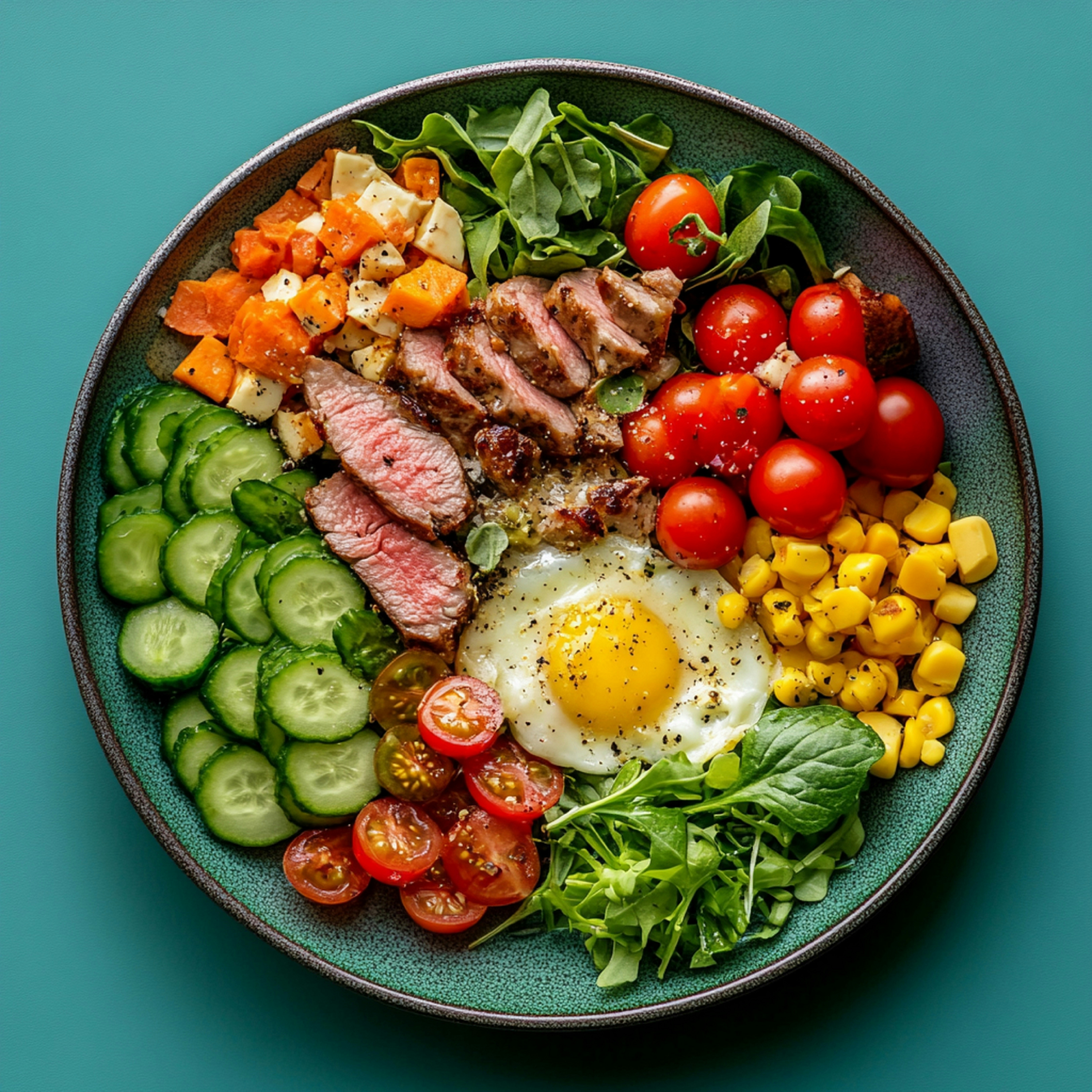
Common Mistakes: Three Bad Habits That Throw Off Your Nutrition
Many people accidentally make these mistakes when putting together their portfolio, turning a healthy meal into something unbalanced.
- Treating VOO as the whole world: The U.S. has been dominant — but that doesn’t mean it always will be. Forgetting to add global markets (VXUS) is like having a plate that’s always missing a splash of green. Risk is overly concentrated. For a deep dive into concentrated versus diversified investing, I highly recommend: The Magnificent 7 (M7) vs. VOO: Ultimate Showdown, which explains the core-satellite strategy brilliantly.
- Going zero bonds when you’re young: Many young investors think bonds are too slow and don’t want to touch them. But their “shock absorber” effect is more powerful than you’d think. During a bear market like 2022, having bonds in your portfolio could’ve saved you a lot of losses — and more importantly, given you the courage to keep investing during the dip instead of panic-selling at the bottom.
- Chasing a nonexistent “golden ratio”: Spending hours debating whether VOO vs. VTI matters, or whether the ratio should be 73 or 82 — ultimately not that meaningful. The best portfolio isn’t the one with the highest return on paper. It’s the one that lets you sleep at night and that you can actually stick with for the long haul.
Frequently Asked Questions (FAQ)
Lazy to Be Concluded

🚀 已有 1,000+ 讀者加入理財成長之路
Further Reading
想學習更多相關知識?
返回 VOO 投資中心 📚