Breaking the Myths of Sub-brokerage: Are the Fees Higher? Cost and Inheritance Tax Advantages Every Long-Term Investor Should Know
- 懶大 (Lan Da)
- 財務工具與金融商品
- Last updated: September 2, 2023
- 4 min read
In this article, you'll learn:
Info
💡 Want to learn more about VOO investment strategies? Visit the VOO Investment Knowledge Center
What is Sub-brokerage? Are Sub-brokerage Fees Always High?
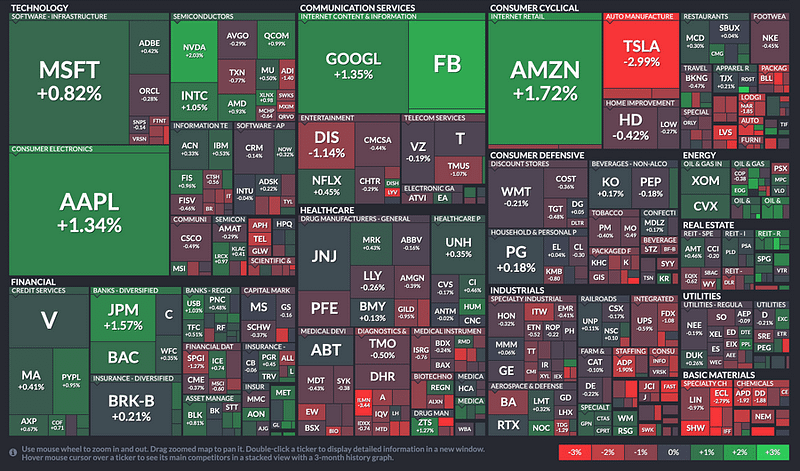
If you want to invest in US stocks, such as shares of companies like Amazon and Google, in addition to opening an overseas securities account, using sub-brokerage through a domestic stock broker is another way to buy them.
What is Sub-brokerage?

The full name of sub-brokerage is “Entrusted Trading of Foreign Securities Business.” Simply put, it means using a domestic broker to place orders overseas for you to buy stocks or ETFs. The sub-brokerage process generally involves: investors placing orders with domestic brokers, who then entrust cooperative brokers to place orders on overseas stock exchanges. The following diagram illustrates this with US stocks as an example:
Sub-brokerage is Like PX Mart (a Taiwanese supermarket chain)
Info
Helping you bring the things you usually need closer to your home
Just like the guava you buy at PX Mart, it goes through distributors before reaching PX Mart. This PX Mart is like a domestic broker, the cooperative broker is like a wholesaler, and the distant farmer is like an overseas exchange (or a direct sales center at the place of origin).
Under normal circumstances, “theoretically,” sub-brokerage fees are slightly higher than those of overseas brokers. However, whether this is acceptable depends. From a “long-term” investment perspective, profits may be slightly affected, but as long as the goal can be achieved, I think it’s better than dealing with a lot of asset issues. You know I’m just lazy (懶), and if I’m lazy, I’ll pay to solve the problem, but this money isn’t unaffordable.
Advantages of Sub-brokerage
- High Security: Sub-brokerage provides high security because you are dealing with familiar Taiwanese brokers and banks. This familiarity can bring extra confidence, especially when dealing with financial matters, where people are usually most concerned about the safety of their funds. In addition, people are also concerned that if they accidentally die, their families can more easily recover the funds.
- Saves Overseas Remittance Fees: Overseas remittance fees can be an important consideration. In fact, if remittances are frequent and small, overseas remittance fees can seriously affect your investment costs. However, if you are dealing with larger funds and remittances are infrequent, the impact of remittance fees will be relatively small.
- Peace of Mind: Investors’ peace of mind is crucial for investment decisions. If you transfer funds to a foreign broker, you may feel uneasy and anxious, while investing through domestic channels may make you feel more at ease.
Although the above content is more about dealing with “feelings,” the safety of funds is indeed what everyone cares about most. No one wants to have a lot of money saved overseas and then have no one know about it after they die? (Doing good deeds shouldn’t be done this way either.)
Disadvantages of Sub-brokerage
- Higher Commission Rates: Compared to overseas brokers and Contracts for Difference (CFD) accounts, sub-brokerage commission rates are indeed higher. This may not be a problem if you have a large amount of capital and plan to invest for the long term.
- No Margin Trading: Sub-brokerage trading of US stocks is different from domestic stock trading and does not offer margin leverage. This may be inconvenient for some short-term traders who may need to borrow money to trade.
- No Short Selling: Sub-brokerage usually does not offer short selling. If you are a medium- to short-term trader or need to short sell, sub-brokerage is not a consideration for you at all.
- Minimum Commission Fee: The minimum commission fee for sub-brokerage is a matter worth paying attention to. For example, if the minimum commission fee is USD 10, even if the actual commission fee for placing an order is only USD 0.5, you will still be charged USD 10. Therefore, under normal circumstances, you usually need to handle at least several thousand US dollars or more when placing a sub-brokerage order to avoid being troubled by high commission fees. It is recommended to confirm the fees with your broker in advance before placing an order to avoid unnecessary losses.
- Fewer Investment Targets: This seems like a disadvantage, but it doesn’t affect the focus of this article at all.
Although the above content looks like disadvantages, the small-capital investment approach has become rampant in recent years, and some methods can still effectively reduce the above problems.
How Much Does Sub-brokerage Cost?
Most people use sub-brokerage mainly for US stocks. The following uses SinoPac Securities’s US stock trading as an example to list the costs that may be incurred in sub-brokerage:
General Sub-brokerage Listed Commission Fee
When using online trading, the commission fee is calculated by multiplying the transaction amount by 0.38%, with a minimum charge of USD 20 (please refer to the notes for detailed event content).
Cash Dividend Tax
In the United States, when US stocks or ETFs pay cash dividends, 30% of the tax will be deducted in advance. This is collected by the US government, and we usually cannot avoid this fee.
Exchange Fee
0.0008% of the transaction price, with a minimum of USD 0.01 (charged when selling). This amount is so small that you don’t need to worry about it.
TAF Fee
TAF (Trading Activity Fee) refers to the fee paid to the US Financial Supervisory Authority. USD 0.000145 is charged per share, with a minimum of USD 0.01 and a maximum of USD 7.27 (charged when selling). For example, if you trade 100 shares, the TAF fee is 0.000145 × 100 shares = USD 0.0145. This amount is so small that you don’t need to worry about it either.
Why Can Long-Term Investors Use Sub-brokerage and Not Care About Commission Fees?
The matter of “long-term investment” is based on the behavior generated under the plan of “financial planning,” that is, the setting of financial goals is usually not planned by “days,” but usually planned by “years.” Such as retirement planning, home purchase plan, car replacement plan, education plan, etc. Because of this plan, the loss of commission fees will not be caused by high-frequency entry and exit. (In the case of some brokers with more entry and less exit, the loss of high-frequency transactions can be almost avoided)
Next, this money will not be a single fund abroad, but will be carried out through continuous accumulation. The sub-brokerage method can save the cost of telegraphic transfer, and the slightly increased transaction fee is regarded as buying another insurance for this money. In case of an unfortunate accident, the family in Taiwan can also directly obtain protection when handling the property.
Then, as mentioned at the beginning of the article, there are currently some methods suitable for small-capital investors, and with the purpose of “long-term investment,” the commission fee can really be ignored.
SinoPac iBrain: The listed commission fee is 1% of the asset value, but in the long run, there is no commission fee for buying and selling at all. It is a good helper for regular fixed amount, and it also has the function of “automatic rebalancing.” (We will write another article to discuss why automatic balancing is important another day)
SinoPac US Stock Savings: From now until 2023/12/31, Taiwan stock commission fee is NT$1, and US stock commission fee is 0.18%, up to USD 1. If you buy USD 100 (NT$3,000), it is about between NT$5–7.
Info
💡 Want to learn more about VOO investment strategies? Visit the VOO Investment Knowledge Center
Further Reading
懶得 (Lazy to be Rich) Conclusion

In addition to the financial planning theories I have learned in the past, assisting clients around me in implementing financial planning, and using “financial planning” to organize finances, in addition to the perseverance to implement, what is indispensable is the financial achievement gained in the process. Financial instruments are neutral. In the process, I occasionally buy some Taiwan stocks to achieve some small happiness through some capital gains.
But the key to this process is that you no longer need to be troubled by short-term entry and exit funds, and you don’t need to save money for seemingly distant savings goals.
No matter what kind of investment plan, if it can be built on “financial planning,” then you can sleep well no matter how you invest in this financial management method.
🚀 已有 1,000+ 讀者加入理財成長之路
想學習更多相關知識?
返回 VOO 投資中心 📚P.S.
The broker I am currently using
SinoPac Securities - Dawho+ (大戶投), sub-brokerage uses the Stock Savings function (豐存股功能), buying has no minimum commission fee threshold (minimum commission fee is NT$0), which is very convenient for small-capital investors. I have been using SinoPac myself and I sincerely think it is very convenient, and it also meets the setting of “long-term investment.” I use both iBrain and Stock Savings, and Taiwan stock orders are also placed through Dawho+.
If you think the above summary is helpful and want to open an account, you can also use my invitation code.
Dawho+ account opening link: SinoPac Securities’ Dawho+ (大戶投) (Purely personal invitation code, no advertising)