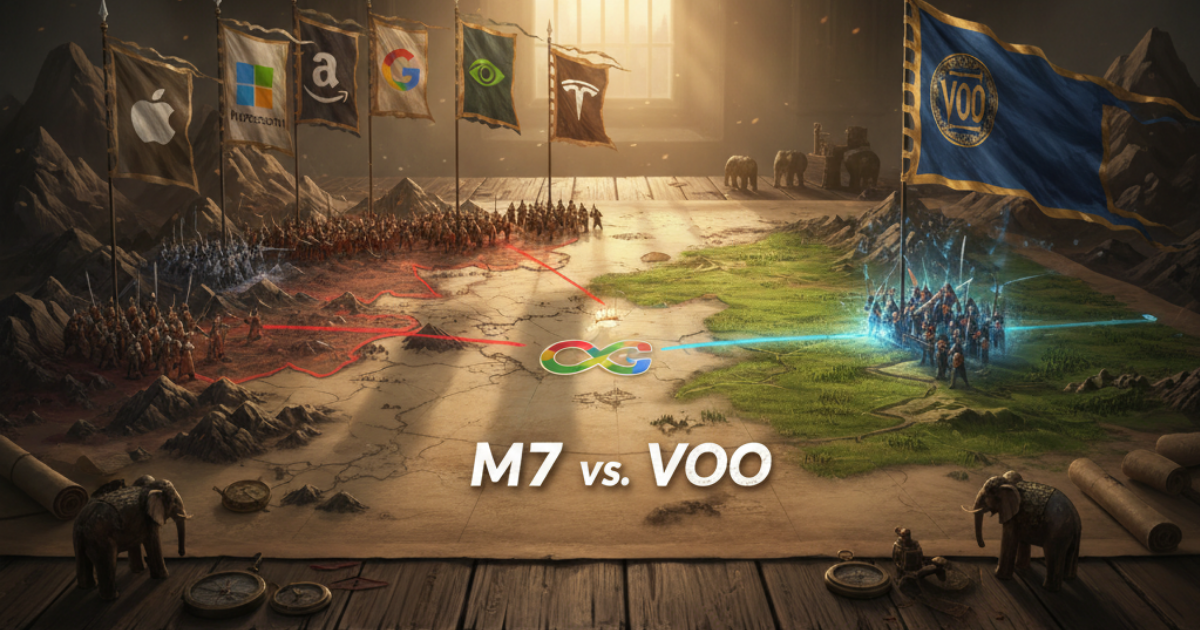
2025 Annual Returns Comparison: 0050, VOO, QQQ — Who Wins? 2026 Allocation Recommendations
In this article, you'll learn:
[!TIP] Data Updated (as of 2026-01-31): The primary comparison in this article has been updated to 2025 calendar-year returns: 0050 approximately +36.85%, VOO approximately +17.82%, QQQ approximately +20.77%. Different platforms may show slight variations due to dividend treatment and NAV vs. market price differences — please verify with your broker before placing orders.
Info
💡 Want to dive deeper into VOO investing? Visit the VOO Investing Knowledge Hub for complete resources from beginner to advanced!
Quick Answer: How Should You Allocate 0050, VOO, and QQQ in 2026?
- Want lower volatility and long-term stability: Start with VOO as your core holding.
- Bullish on Taiwan’s AI supply chain: Add 0050, but be prepared for higher concentration risk.
- Want higher growth potential: Use a small allocation of QQQ as a satellite position — don’t go all-in on a single market.
- Not sure about allocation percentages: Start with the ETF Beginner Allocation Toolkit to build your first version, then fine-tune.
In 2025, global equity markets continued their growth trend with AI and mega-cap tech stocks still driving the market. However, Taiwan stocks — led by their heavyweight components — still clearly outpaced major U.S. indices. Here are the annual returns for three popular ETFs:
- Yuanta Taiwan 50 (0050): +36.85%
- Vanguard S&P 500 ETF (VOO): +17.82%
- Invesco QQQ ETF (QQQ): +20.77%
Why did Taiwan 50 (0050) still significantly outperform both the S&P 500 and NASDAQ 100 in 2025? This article will analyze the performance gap from the perspectives of component stock influence, valuation differences, interest rate policy, and capital flows.

0050 vs. VOO: A Head-to-Head Deep Dive
While each of the three has its own advantages, the toughest choice for many Taiwanese investors is still deciding between “investing in Taiwan” and “investing in the U.S.” Let’s pull out 0050 and VOO for a one-on-one deep comparison.
| Comparison Item | Yuanta Taiwan 50 (0050) | Vanguard S&P 500 ETF (VOO) | Lazy Da’s Take |
|---|---|---|---|
| Market | Taiwan | United States | Don’t put all your eggs in one basket — but which basket is main? |
| Key Holdings | TSMC (Taiwan Semiconductor, ~64.56% weight) | Apple, Microsoft, NVIDIA, and 500 more | 0050 is highly concentrated — TSMC makes or breaks it |
| Risk Diversification | Risk highly concentrated in electronics sector | Spans 11 sectors, extremely diversified | VOO is the classic “lie-flat” investment choice |
| Expense Ratio | ~0.0861% (official management fee) | 0.03% | Long-term, VOO’s ultra-low cost remains a key advantage |
| Currency Risk | None (New Taiwan Dollar) | Yes (USD exchange rate fluctuation) | Investing in VOO requires factoring in exchange timing and costs |
| Best For | Aggressive investors bullish on Taiwan’s tech industry | Investors who prefer steady, long-term global exposure | Beginners: start with VOO, then consider 0050 |
The Key to 0050’s Rally: TSMC’s Enormous Influence
0050 tracks Taiwan’s top 50 market-cap stocks, and TSMC (2330) has risen to approximately 64.56% of the weighting (as of 2026-02-11), so TSMC’s stock performance has a very direct impact on 0050. In 2025, Taiwan’s AI supply chain continued its strong momentum, further powering 0050’s performance.
By comparison, VOO tracks the U.S. S&P 500 Index, and QQQ tracks the NASDAQ 100 Index. While both are also benefiting from AI-related stocks, their holdings are more diversified, which relatively limits their upside.
Comparison: Component Stock Influence
| ETF | Key Holdings | AI Beneficiary Level | Impact on ETF Returns |
|---|---|---|---|
| 0050 | TSMC, MediaTek, Quanta Computer, Gigabyte | High (TSMC at high weight) | Enormous impact, driving 2025’s +36.85% |
| VOO (S&P 500) | Apple, Microsoft, Amazon, NVIDIA | High, but more diversified | Moderate impact, ~+17.82% in 2025 |
| QQQ (NASDAQ 100) | NVIDIA, Microsoft, Meta, Google | High (major tech beneficiaries) | Larger impact, ~+20.77% in 2025 |
Taiwan Stocks vs. U.S. Stocks: Valuation Differences
As of late January 2026, markets generally observed valuation differences between Taiwan and U.S. stocks:
- S&P 500 (VOO): approximately 22–25x P/E
- NASDAQ 100 (QQQ): approximately 30–35x P/E
This means that when markets favor “growth + low valuation” combinations, Taiwan stocks more easily attract capital inflows. U.S. stocks, with higher large-cap valuations, typically need continuously better-than-expected earnings to sustain their rally.
🔹 Lower-valuation markets are more likely to attract capital inflows, driving stock prices higher
🔹 U.S. stocks carry a higher P/E, requiring stronger earnings momentum to push prices up

U.S. Federal Reserve (Fed) Interest Rate Policy Impact
The January 2026 FOMC meeting kept the Federal Funds Rate at 3.50%–3.75%, signaling that monetary policy remains cautiously restrained. This has a valuation impact on both VOO and QQQ, especially QQQ with its heavier weighting in growth stocks, which tends to be more sensitive to interest rate changes.
By comparison, Taiwan stocks are less influenced by U.S. rate policy, and foreign capital continues to flow in, further driving 0050 higher.

Taiwan’s AI Supply Chain vs. U.S. AI Giants
The AI boom is driving the tech sector, but it’s affecting Taiwan stocks and U.S. stocks in different ways:
🔹 Taiwan Stocks: Led by AI supply chain companies (TSMC, Quanta Computer, Gigabyte, Wistron)
🔹 U.S. Stocks: Led by AI application companies (NVIDIA, Microsoft, Meta)
In 2025, AI server, chip, and cloud capital expenditure remained elevated, continuing to lift technology leaders in both Taiwan and the U.S. The difference: 0050 concentrates its bet on Taiwan’s heavyweight stocks, while VOO and QQQ ride the same tech wave through varying degrees of diversification.
🔥 What Investors Care Most About: QQQ vs. VOO Deep Dive
📊 Basic Info Comparison Table
| Comparison Item | QQQ | VOO |
|---|---|---|
| Tracked Index | NASDAQ 100 | S&P 500 |
| Expense Ratio | 0.20% | 0.03% |
| Number of Holdings | 100 stocks | 500 stocks |
| Primary Sector | Technology-heavy (54%) | Diversified across sectors |
| 2025 Return | +20.77% | +17.82% |
| 10-Year Annualized Return | ~19.45% | ~14.81% |
| Volatility | Higher | Lower |
💡 QQQ vs. VOO: Which One Is Right for You?
3 Reasons to Choose QQQ:
- 🚀 Tech Growth Potential: Concentrated in tech giants, clearly benefiting from AI trends
- 📈 Strong Historical Performance: Long-term returns outpace the broader market
- 🎯 For Aggressive Investors: Willing to accept higher volatility in exchange for potentially higher returns
3 Reasons to Choose VOO:
- 💰 Ultra-Low Expense Ratio: 0.03% is 1/7 of QQQ’s, with significant long-term compounding effect
- 🛡️ Risk Diversification: 500 stocks spanning 11 sectors, relatively lower risk
- 📊 Steady Growth: Suitable for conservative investors, relatively mild volatility
🎯 2026 Investment Recommendations
Scenario 1: Beginner Investor → Start with VOO to build investing confidence
Scenario 2: Experienced Investor
→ Consider an 8:2 or 7:3 VOO:QQQ allocation
Scenario 3: Growth-Oriented Aggressive Investor → Can increase QQQ weighting to 40–50%
Frequently Asked Questions (FAQ)
Further Reading
Lazy Da’s Wrap-Up

Why was 0050 able to significantly outperform VOO and QQQ? The key factors:
- TSMC has an extremely high weighting, and its big rally drove 0050’s gains
- Taiwan stocks carry lower valuations, with capital inflows lifting the overall market
- U.S. stocks were more constrained by interest rate policy, limiting growth
- Taiwan’s AI supply chain benefited more directly, driving its outperformance
If you’re focused on the AI sector, 0050 was still the relatively stronger performer in 2025. However, our real focus is not chasing who won in a single year — it’s whether your assets are reasonably allocated so they can grow over the long term.
🚀 已有 1,000+ 讀者加入理財成長之路
Data Updates & Sources (as of 2026-01-31)
- QQQ / S&P 500 2025 annual returns: Invesco QQQ official performance page
https://www.invesco.com/us-rest/contentdetail?contentId=841e411c-a1eb-4541-8cb8-0fa603abea81&dnsName=us