The Ultimate Guide to Salary Allocation (2024)! Practice the "Save First, Spend Later" Financial Method in 3 Steps
In this article, you'll learn:
At the end of each month, many people can’t wait for their salary to be deposited so they can live a good life. However, when your salary comes in, do you spend first and then save, or save first and then spend?
If you spend first and then save, you may fall into a financial crisis. Because you never know if you will have unexpected expenses, and if you don’t save enough money, you will have to borrow money to make ends meet, and you may end up in a quagmire of debt.
Spending First, Saving Later Means Being Short of Money
“Xiao Ma” is a typical example of someone who spends first and then saves. Every month when his salary is deposited, he can’t wait to buy what he wants. He likes to buy new clothes, new shoes, every generation of new iPhones, and even go to some enjoyable places.
Recently, Xiao Ma received his salary and immediately snatched up the latest iPhone 15 at night. He thought to himself that holding the latest color in his hand and using the Type-C that everyone else has to charge his iPhone 15 was so enjoyable! He imagined himself being the first to receive it among his relatives, friends, and colleagues! This sense of superiority made him spend without hesitation on new things.
However, on the way home from work, Xiao Ma accidentally lost his new phone. Xiao Ming was as anxious as an ant on a hot pot, not knowing what to do. In the end, Xiao Ma had to borrow money from a friend to buy a new phone. However, he didn’t have money to pay his friend back, so he had to borrow money from another friend. In this way, Xiao Ming fell into a vicious cycle of borrowing money.
Xiao Ma’s example illustrates that spending first and then saving can easily lead to a financial crisis. Because you never know if you will have unexpected expenses, and if you don’t save enough money, you will have to borrow money to make ends meet, and you may end up in a quagmire of debt.
Overdrafting the Future Leads Directly to Debt
Xiao Ma’s scenario is just “spending” money, while “Asi” in another scenario never has enough money on hand because he bought a Tesla, iPhone, the highest-end PC, and the latest Mac Pro through installment payments.
Okay! Asi only earns a little over NT$40,000 (USD 1,250) a month, but he has a credit loan for the down payment on the Tesla, installment payments for the Tesla car loan, and installment payments for the latest 3C products on his body.
Done! He owes the bank money, and still owes the bank money.
Alright! Friends see his life as very enjoyable.
Bye! If there is a sudden global interest rate hike, he will probably have to sell his butt.
Save First, Spend Later, Then You Can Spend It All More Happily
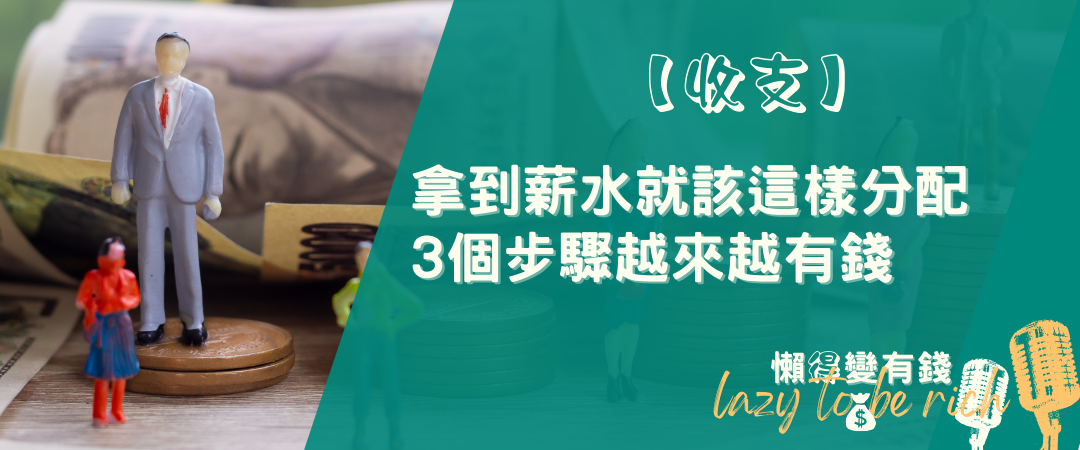
To avoid the stories of Xiao Ma and Asi, we should save first and then spend. The approach of saving first and then spending can be divided into the following three steps:
Step 1: Spend the Necessary Money First
First, you must spend all the expenses for your financial goals. It’s still spending, but the expenditure for financial goals is to purchase assets to meet future needs (such as buying stocks, ETFs, fixed deposits, and other financial products). This way, no matter how much money you have left, you can spend it all happily. (I’m a moonlighter, and I’m proud of it)
Step 2: Then Come the Necessary Expenses
Next, you need to use part of your salary to pay for necessary expenses, such as rent, utilities, and transportation. These expenses cannot be saved, so you need to budget well and not overspend.
The budget estimate does not have to be accurate to “every penny.” It’s like we can’t limit ourselves to only turning on the air conditioner for 2 hours a day, and turning it off after falling asleep. And we can’t be at home with the air conditioner on 24 hours a day.
Therefore, the budget assessment should be based on “reasonable and necessary expenses.”
Step 3: Finally, What You Want
Finally, the remaining money is what you can freely spend. You can use it to buy what you want, such as clothes, shoes, and food.
The approach of saving first and then spending can help you build financial security and avoid falling into a quagmire of debt. Of course, if you are a second-generation rich person, then you can spend money as you please. However, for most ordinary people, saving first and then spending is the wise choice.
Why Not Talk About Skills or Methods?
If you have been following my articles for a long time, you will find that I rarely talk about “methods” or “skills” such as 631 allocation or 333 allocation because methods and skills are just means to achieve the goal. Because everyone has different financial DNA, no one is absolutely suitable for a certain financial management method or rule. The most important thing is the core of financial planning.
The true value of financial management is to make yourself happy.
Further Reading
Lazy to Conclude (懶得有結論)

Earn > Save > Spend
These three words look simple, but they are actually extremely difficult to implement. People who cannot implement them usually reverse the order. Or they know they want to do this, but their bodies don’t listen. The reason is the common problem most people have when dealing with money.
Spend > Save > Earn
Spending first, then saving, and earning more if not enough has become a common phenomenon in modern society. Of course, this is not entirely a social result that everyone is willing to accept, because some jobs just need people, and the salaries of these jobs cannot be “high.” In other words, if you can’t fully change the status quo, you can only work hard to change the result.
First buy a cool Tesla in installments and then save only a few thousand NT dollars (USD 100) a month (and have to pay high loan payments), then you have to put more time into work (take on more jobs), which is getting further and further away from financial freedom.
Of course, the above expresses only one aspect of income and expense management. It does not mean that part-time jobs or side hustles are bad. The key is whether these side hustles or part-time income are used in a positive financial cycle of “Earn > Save > Spend” or whether side hustles or part-time jobs are just a last resort under “Spend > Save > Earn”?
🚀 已有 1,000+ 讀者加入理財成長之路