The "Calm and Composed" Investment Philosophy: Decoding Viral Lyrics to Escape a Life of Rushing and Scrambling
In this article, you'll learn:
Is Your Ideal Life “Effortlessly Masterful” or “Rushing and Scrambling”?
“Calm and composed, effortlessly masterful” — these eight words might be the ultimate description of what everyone secretly wishes their life could look like. They represent a kind of inner peace, a sense of control over one’s life, and the quiet confidence to face the future head-on.
Reality, however, often tells a very different story.
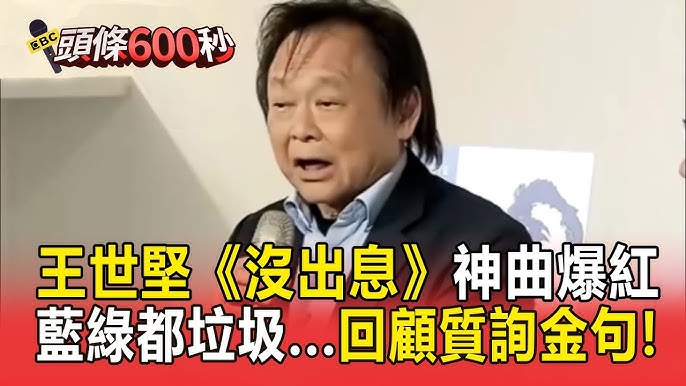
Recently, a viral song called “No Ambition” (沒出息) — a remix of pointed remarks by a well-known Taiwanese politician — exploded online. One of its lyrics, “rushing and scrambling” (匆匆忙忙,連滾帶爬), struck a nerve with millions of listeners in a way that’s both absurd and deeply, uncomfortably real.
Does that lyric describe your own financial life?
This article will walk you through an analysis of this viral song’s lyrics, help you find yourself in them, and — more importantly — map out a clear path from the “rushing and scrambling” reality to the “calm and composed” ideal.
Before we begin, here’s the most widely circulated version of the lyrics that swept the internet:
The Viral Song “No Ambition” — Internet Compilation Lyrics
What it should have been: calm and composed, effortlessly masterful.
What it actually is: rushing, scrambling, rolling and crawling.
You’re telling bare-faced lies — what are you even choking up about?
What are you crying for? No ambition.
“What It Should Have Been: Calm and Composed, Effortlessly Masterful”
Before life punched us in the face, who among us hasn’t fantasized about a wealthy, “calm and composed, effortlessly masterful” future?
This isn’t about owning billions or a private jet. It’s about a deeper state of being:
- Mental composure: Your assets (like stocks and ETFs) work like loyal employees, clocking in 24 hours a day to generate passive cash flow. You no longer lie awake worrying about next month’s bills, because you know that even if you stopped working, life would still be livable.
- Decision-making confidence: When markets rise and fall, your mind stays calm. You have an investment system you trust — downturns are your chance to smile and add more; upswings are the outcome you’d planned for all along. You possess genuine “optionality” — the ability to work because you want to, not because you have to.
“Peace of mind is the foundation of life. If you can live with peace of mind, everything else can be calm. And peace of mind comes from knowing what ’enough’ looks like.”
That’s the ideal world we’re all chasing. But why do so many people end up in the next scene instead?
“What It Actually Is: Rushing, Scrambling, Rolling and Crawling”
The most painfully honest lyric in the song is “rushing and scrambling, rolling and crawling” (匆匆忙忙,連滾帶爬). These eight words precisely capture the financial predicament most people find themselves in — especially when it comes to stock investing.
The Starting Point of Imbalance: “I Only Earn NT$30,000 a Month…”
All the chaos begins with losing control of your own cash flow. When every dollar is squeezed dry by daily expenses, you lose the capital to invest in your future. You’re stuck in place, waiting for a “tomorrow” that will never just magically improve on its own.
Don’t expect money to multiply without doing anything. And don’t expect everything to get better just because money increases.
Of course, earning little is a real-world problem. But surrendering to that reality is still a choice — and if you’re going to lose, at least lose on your own terms. The real question is whether you’ve ever thought about how to increase your own value, to make each hour of your life worth more.
If you currently earn NT$50,000 a month, your life is worth NT$0.019 per second.
Calculating per second might seem petty, but it’s a useful exercise to close the perceived gap with someone earning NT$1,000,000 a year — because they’re only at NT$0.0317 per second, ha! I’m just being playful, but the real point is: zooming in on that number is far more motivating and reliable than trying to get rich fast with minimum effort.
Anxiety-Driven Action: “Rushing, Scrambling, Rolling and Crawling”
When I was young, I, too, was a card-carrying member of the “rolling and crawling” club. I traded warrants — some days I made NT$200,000–300,000 and felt like a god; then greed pushed me into Taiwan Futures (台指期). Because of greedy position-sizing, I lost everything. That feeling of falling from heaven to hell — that was rushing and scrambling, in the most visceral sense.
- Rushing: You might be the type who chases hot tips and trends impulsively. You see someone making money on AI stocks and pile in. You hear a coin is about to moon and go all-in. You’re always looking for overnight wealth. And if the bottom ever drops out of the crypto market and wipes out a large chunk of your assets — that’s on you.
- Scrambling: You might also be the kind of investor who buys high, panic-sells low, gets trapped, and gets cut in volatile markets. Without a strategy, every investment decision is driven by fear and greed, leaving you physically and emotionally exhausted.
“What Are You Crying For? No Ambition.”
After investment losses, the scariest thing isn’t the financial damage — it’s the collapse of confidence.
“I knew I couldn’t handle money.” “I just don’t have what it takes.” These voices of self-doubt can make us give up entirely, falling into the hopeless spiral of learned helplessness. The line “no ambition” — rather than being someone else’s mockery — often ends up being our own ruthless verdict on ourselves, the one that keeps us from ever getting back up.
But here’s the truth: you’re not “no ambition.” You simply used the wrong approach.
It’s not that you can’t invest — it’s that you shouldn’t invest wildly before you’ve found your footing. Think of it like starting a business: if you were opening a bubble tea shop, would you hire 10 employees on day one? Or would you start by doing everything yourself? The logic is the same — doing it yourself means saving on labor costs, and carrying that load yourself. Once your monthly revenue consistently exceeds 2x the cost of one employee, then you have the margin to hire. Investing works the same way: if you’re still in the wealth-accumulation phase, do not put your money into high-risk assets.

How to Go From “Rolling and Crawling” to “Calm and Composed”
Going from chaos to composure requires a clear, executable action plan. The most common mistake beginners make is treating “investing” as the starting point of financial planning — but “planning” comes first. Without a destination, even the fastest car just gets you lost.
Action One: Build Your “Composure” Money Machine — Automated Investing
The simplest and most effective strategy for achieving financial composure is regular fixed-amount investing in broad-market ETFs (Exchange-Traded Funds, index-tracking investment funds).
- Why broad-market ETFs? Because they let you buy into hundreds or even thousands of the world’s top companies in one single purchase — for example, VOO tracking the S&P 500, or VT tracking the global market — dramatically spreading risk. You don’t need to guess which company will be the next giant. You just need to believe in humanity’s long-term economic development.
- Why fixed-amount investing (dollar-cost averaging)? Because it helps you overcome human nature. Regardless of whether the market is up or down, you invest a fixed amount at fixed intervals — buying fewer units when prices are high and more units when prices are low. Over time, this effectively lowers your average cost. That’s the “smile curve” in action.
Action Two: Simplify Your Financial Decisions — Less Is More
Investors who are “rolling and crawling” might have dozens of stocks, funds, and cryptocurrencies in their accounts, spending all their mental energy just tracking the daily swings.
The “calm and composed” investor is the exact opposite. Their portfolio is often strikingly simple — perhaps just 2–3 core ETFs. Because they understand that investment returns don’t come from frequent trading, but from long-term asset growth.
Action Three: Make Time Your Friend — Embrace Compound Interest
Einstein once said: “Compound interest is the eighth wonder of the world.” The tragedy of “still struggling halfway through life” is precisely the failure to put this powerful friend to work for you.
As long as you start early and stay committed to long-term investing, even modest monthly contributions — through the snowball effect over 20 or 30 years — will deliver returns beyond imagination, allowing you to truly live “effortlessly masterful.”
Frequently Asked Questions (FAQ)
Further Reading
The Lazy Conclusion

🚀 已有 1,000+ 讀者加入理財成長之路