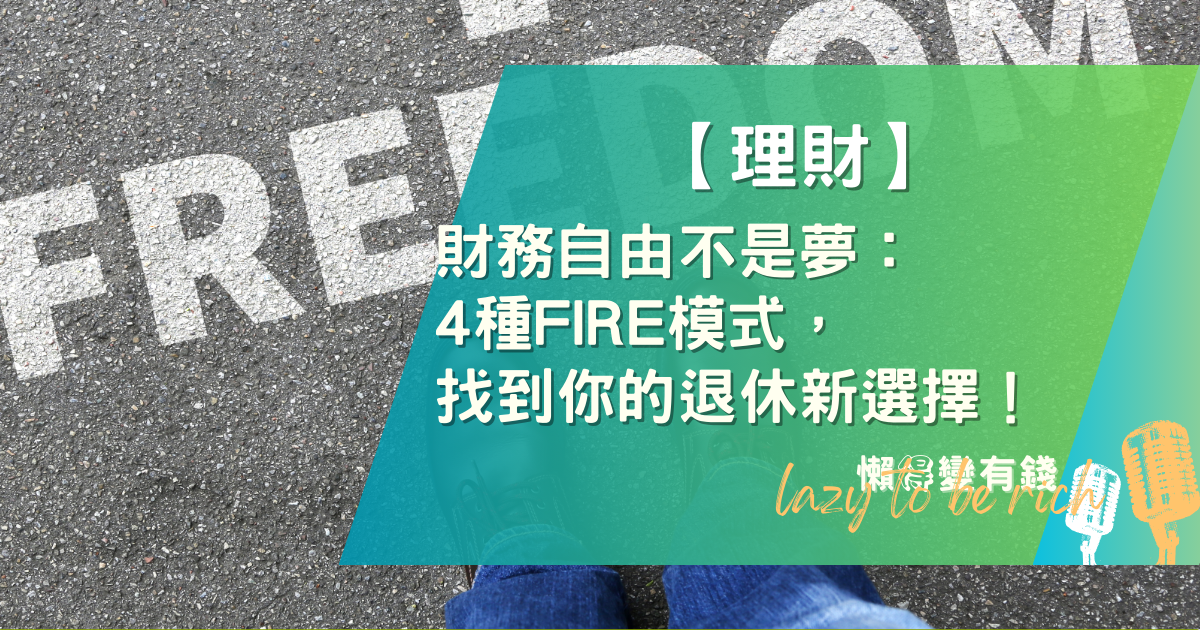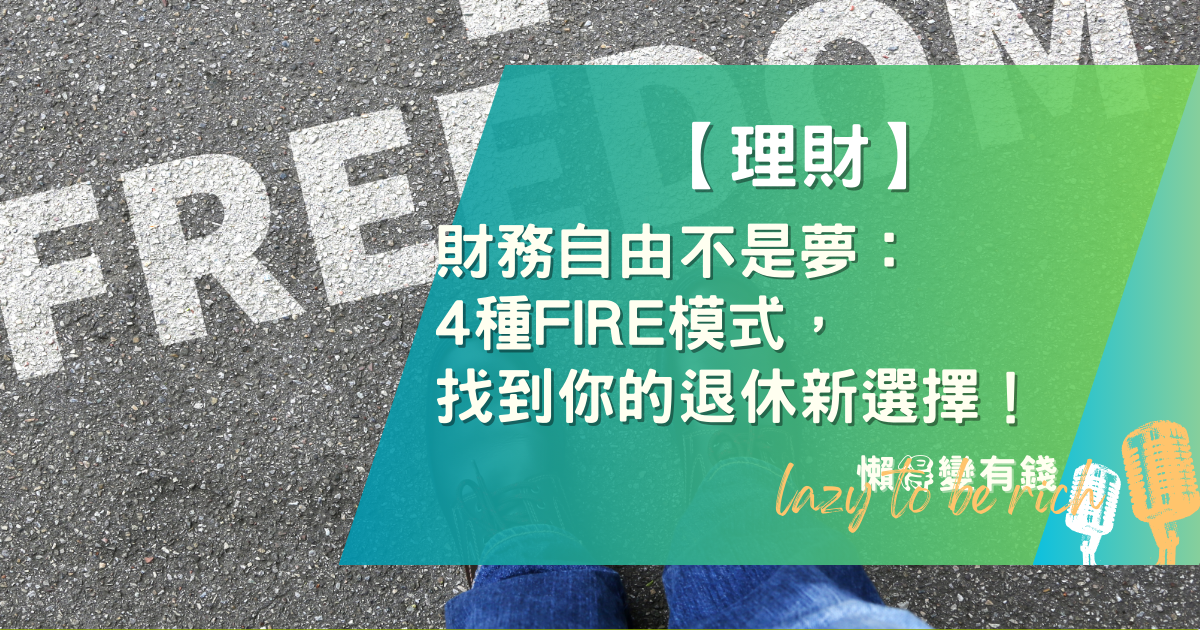
The Complete FIRE Guide: 4 Ways to Retire Early and Accelerate Your Financial Freedom
In this article, you'll learn:
Lazy to Be Rich — Quick Take
To all of you who want to be lazy but can’t, and those who can’t be lazy but desperately want to…
If you’ve ever daydreamed about not working but still living comfortably, you’re actually craving a life goal: financial freedom.
This article isn’t about getting rich overnight. It’s about drawing from the FIRE movement (Financial Independence, Retire Early) to learn financial techniques and mindsets you can put into practice right away. Whether or not you plan to retire early, you’ll find inspiration here for living a freer life.

The Real Flex of Financial Freedom Is No Longer Working for Money
Imagine this: your friends are pulling overtime for a paycheck, while you’re sipping coffee at 3 PM looking totally unbothered. That’s the spirit of FIRE — not flexing wealth, but flexing freedom. Because coffee doesn’t cost much, but it shows you have abundant time and autonomy. If you want to move toward a FIRE goal, here’s what FIRE achievers commonly do:
Save and Invest More Than Half Your Income
The single most important first step toward financial freedom is building a powerful saving habit. FIRE communities generally agree that directing 50–70% of income toward savings and investment is the key. It’s not an easy number to hit, but it can be achieved gradually through:
- Savings always come first — never spend what’s left and then save; practice save first, then spend.
- Set up automatic transfers so saving becomes a required expense.
- Direct all additional income — raises, bonuses, windfalls — straight into investment while maintaining your current lifestyle.
This high savings rate sounds extreme, but that “extreme” is exactly what allows FIRE practitioners to achieve in 10–15 years what most people take 30–40 years to accomplish.
Reject Overconsumption, Embrace Simple Living
FIRE practitioners place special emphasis on the genuine value of spending, rather than blindly chasing material goods. This mindset shows up as:
- Asking whether something is a need or a want before buying
- Choosing practical, durable goods instead of chasing trends or brands
- Opting for free or low-cost leisure activities such as reading, exercise, and outdoor activities
This doesn’t mean living like an ascetic. It means finding the optimal balance between spending and quality of life. By cutting unnecessary consumption, you’ll discover life can be wonderfully simple — and still rich and fulfilling.
Take Control of Money, Rather Than Being Forced to Work for It
Most people spend their whole lives working for money — but true financial freedom is making money work for you. This means:
- Building multiple income streams, not relying on a single salary
- Learning to generate passive income from assets, such as dividends and rental income
- Finding balance between work and life, rather than being chained to a job
When you start controlling money instead of the other way around, your life choices expand dramatically. You can choose interesting work opportunities rather than being forced into jobs you dislike purely for the higher paycheck. That’s the real meaning of financial freedom: the freedom to choose.
This lifestyle is the most aspirational social flex of our time. Modern society generally supports taking personal leave, sick days, and vacation days — once you feel “I have enough money,” you’re free. (Most people just never reach the moment where they recognize they have enough.)
Life’s Major Turning Points Are Often What Spark the Pursuit of Financial Freedom
Online, I came across a deeply thought-provoking true story: a 40-year-old single mother, facing severe financial anxiety after a divorce. She stumbled upon the FIRE movement’s philosophy and began investing in index ETFs. Over five years, she made a remarkable transformation — leaving an extremely high-stress job in finance, successfully starting her own business, and running a nonprofit organization.
This story tells us: real change rarely comes from having a pile of money — it usually comes from life pressure forcing us to rethink how we want to live.
Financial Freedom Doesn’t Give You Happiness — It Gives You Peace of Mind

Many people mistakenly believe financial freedom’s purpose is to live more luxuriously. But the truth is:
It gives you peace of mind — you no longer need to worry about where the next paycheck is coming from.
No More Fear of Getting Laid Off
As your level of financial freedom rises, an unexpected layoff notice stops being terrifying. With a sufficient financial cushion, you can calmly evaluate your next career move without rushing to accept any suboptimal offer. That security lets you remain composed at work and focus on personal growth and career development — rather than being haunted by fear of unemployment. Of course, if you have no financial buffer and carry a mortgage, you’ll find yourself simply nodding and doing whatever the boss says.
No More Settling for Terrible Jobs
As your financial freedom grows, you no longer have to swallow bad working conditions just for a paycheck. With a solid financial buffer, you can say “no” with more confidence, directing your time and energy toward opportunities that truly add value and spark growth. This not only improves job satisfaction — it leads to smarter, more fulfilling career choices.
You Can Spend Time on the People and Things That Matter to You
The most precious gift of financial freedom is the ability to allocate your time as you choose. When you’re no longer forced to work overtime or skip vacations for survival, you can:
- Spend quality time with family, not missing the moments that count
- Pursue hobbies or develop a side hustle, chasing what genuinely fulfills you
- Give back through volunteering, contributing your time and skills to society
This kind of time freedom often brings more happiness and fulfillment than a pure dollar amount. When you control how your time is spent, quality of life naturally improves.
The 4 Types of FIRE: Which One Fits You?
| Type | Definition | Income Source | Best For | Key Features & Example |
|---|---|---|---|---|
| Traditional FIRE | Fully retire early; live entirely off investment returns; stop working altogether | Investment assets (ETFs, stocks, retirement accounts) | High-income, high-savings individuals; targeting retirement at age 35–50 | 💡 Savings rate needs to reach 50–70%; retirement fund must be precisely calculated 📌 Example: Software engineer retires at 38; ETF dividends cover annual living expenses |
| Barista FIRE | Partially financially free; quit full-time job for part-time work that covers living costs while preserving lifestyle freedom | Investment income + part-time income | Those wanting to escape high-pressure jobs while keeping steady cash flow and work-life balance | 💡 Common motivation: retain health insurance or flexible hours 📌 Example: Finance professional becomes a barista working only 3 days a week |
| Coast FIRE | Saved enough for retirement while young; let assets grow naturally; only need to earn enough for current living costs | Current cash income (day-to-day); retirement fund already secured | Those who started investing early (ages 25–35) and want to change lifestyle or careers | 💡 No longer saving for retirement; just earning enough for daily life 📌 Example: 30-year-old freelancer whose accumulated investments are already sufficient for retirement at 60 |
| Cashflow FIRE | Doesn’t rely on a large lump-sum retirement fund; instead, stable passive income covers living expenses | Dividends, rental income, creative income, and other passive cash flows | Those skilled at side hustles, content creation, or who don’t want to wait for a traditional retirement to feel free | 💡 Prioritizes cash flow over total asset value 📌 Example: Content creator whose subscription income generates monthly passive cash flow that exceeds expenses |
These publicly recognized paths mean everyone can find a financial freedom route that suits them — without being locked into a single retirement formula.
3 Things to Watch Out for on the Path to Financial Freedom
Multi-Account Allocation
Spreading your money across different accounts is an important strategy on the road to financial freedom. It reduces risk and helps you manage funds more effectively. Recommended minimum setup:
- Daily expenses account: handles monthly fixed spending
- Emergency fund account: holds 3–6 months of living expenses
- Investment account: dedicated to various investment activities
- Specific goal account: saving toward goals like travel or continuing education
Multi-account allocation lets you clearly see what each dollar is doing, and avoids the risk of putting all your eggs in one basket.
And remember — don’t rely only on your company or the government for retirement income. Expand into stocks, bonds, and other investment vehicles.
Know Your “Freedom Number”: Annual Expenses × 25
To reach financial freedom, you need to know your “freedom number.” The formula is annual expenses multiplied by 25. Why 25?
This is based on the famous 4% withdrawal rule — meaning if you withdraw 4% of your investment portfolio each year, it can theoretically sustain itself indefinitely.
For example, if your annual expenses are NT$600,000, your freedom number is NT$15,000,000 (NT$600,000 × 25). If properly invested, that sum at a 4% withdrawal rate provides NT$600,000 per year in passive income — exactly meeting your needs. Keep in mind this number shifts with your lifestyle and inflation, so review and adjust your freedom number periodically.
Plan for High-Risk Expenses
When planning for financial freedom, beyond daily living costs, pay special attention to potentially large unexpected expenses. These may not happen every month, but when they do, they can be significant enough to derail your financial plan. Key items to plan for:
- Medical expenses: healthcare costs tend to rise with age. Beyond basic national health insurance (健保), consider commercial medical policies covering critical illness, actual-cost reimbursement (實支實付), and more.
- Long-term care: caregiving needs for parents or yourself can be a substantial cost
- Children’s education: from preschool through university, education costs often outpace inflation
- Emergency repairs: unexpected home or vehicle repairs also require a budget
Consider setting up a separate emergency fund specifically for these high-risk expenses, so they don’t derail your financial freedom plan.

From Anxious Mom to Free Entrepreneur: A True FIRE Transformation Story
A-Mei (阿美) was a divorced single mother grinding through a high-pressure finance job every day while raising a young child. Every time she looked at her bills and mortgage, she was filled with dread, terrified that one day she’d lose her job and her life would fall apart.
The turning point came three years earlier, when she stumbled across a blog post about the FIRE movement. The article inspired her to rethink her financial planning and lifestyle. She began systematically tracking expenses, studying investment strategies, and gradually building multiple income streams.
After seven years of effort, A-Mei had not only paid off all her debts but built a stable investment portfolio. She had the courage to leave her original job and launch her own financial consulting practice. While her income is no longer as high as before, she now has far more time with her child, and her life has become richer and more fulfilling.
A-Mei’s success didn’t rely on extreme frugality — it came from a smart investment strategy combined with thoughtful side-income planning. She directs 30% of her income into index funds, while also leveraging her professional expertise to take on freelance cases and financial literacy courses, creating multiple income channels.
Today, A-Mei says with a smile: “Now I can live the life I designed, within a budget I set myself. Most importantly, I don’t lose sleep over money anymore — I can truly enjoy every moment of life.” Her story proves that FIRE isn’t just about accumulating money — it’s a choice to live with greater quality.
Seven years isn’t short, but it isn’t that long either. With the right investments, over the past 7 years the global ETF VT alone rose 74% — and VOO performed even better!!
Tip
Recommended reading: What Is VOO? 0050 vs VOO — A Complete Lazy Investor’s Comparison | Lazy to Be Rich
Recommended reading: An Emergency Fund Isn’t Really for When You’re in an Emergency!
Lazy Conclusion

FIRE isn’t just about retirement — it’s really:
A way to live the life you designed yourself.
You can choose to keep working — but no longer be held hostage by a “paycheck.”
You can choose to spend — but every dollar is conscious and intentional.
Financial freedom isn’t about hoarding money until you die — it’s about being able to use money, at the right time, in the ways that set you free.
🚀 已有 1,000+ 讀者加入理財成長之路