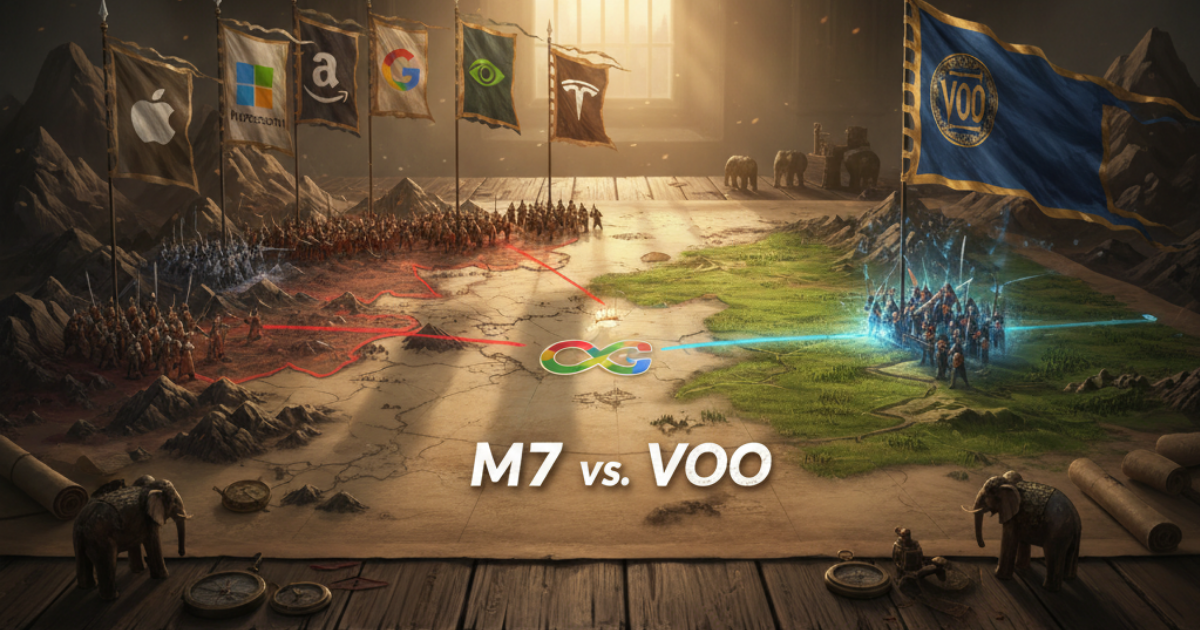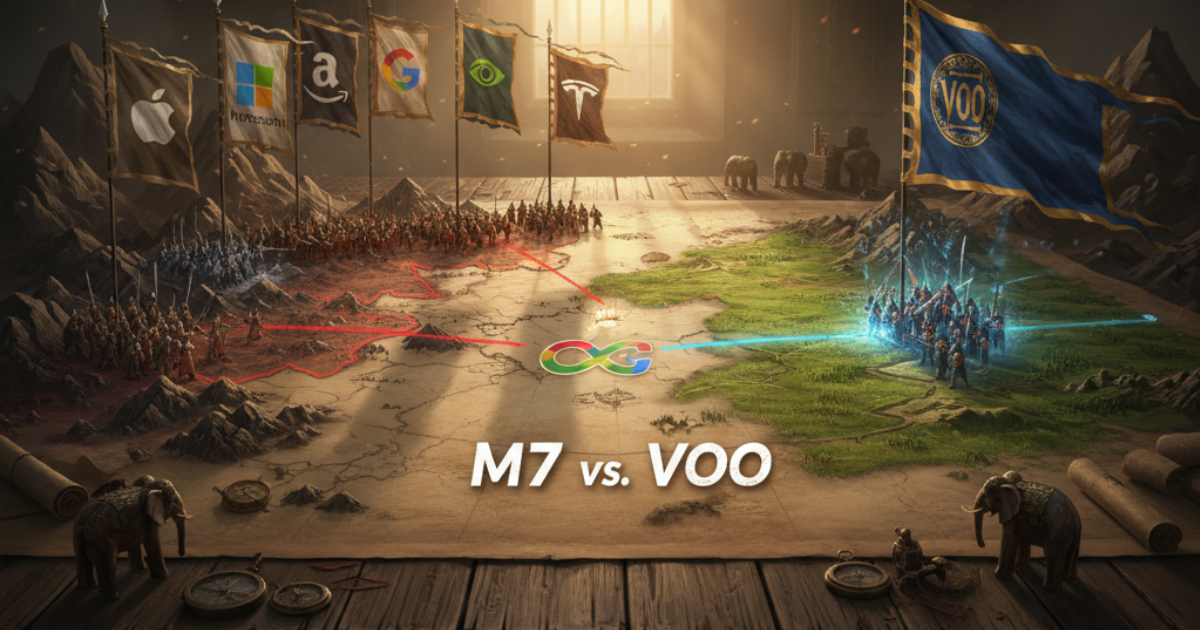
0050 vs. VOO Ultimate Showdown (2025): Taiwan Champion or Team USA? A Complete Data-Driven Analysis
In this article, you'll learn:
Info
💡 Want to learn more about VOO investment strategies? Visit the VOO Investment Knowledge Center
Beginner’s Guide: Why You Should Know About ETFs
Is Investing Hard? Maybe You Just Need a Simpler Starting Point
Want to invest but don’t know where to begin? Overwhelmed by all those stock tickers? Don’t worry — you might just need a simpler starting point. Investing shouldn’t be a privilege for the few, nor a gamble that requires constantly watching the screen. For those who want steady growth without too much effort — the “lazy investors” — ETFs are absolutely the best way to kick-start your financial journey. More importantly, what you need is a clear financial plan, not spending all day analyzing financial instruments.
What Exactly Is an ETF? One Sentence to Understand This “Lazy Investor’s Secret Weapon”
ETF stands for Exchange Traded Fund.
Sounds complicated? Don’t be scared — think of it like buying a pre-made “hot pot ingredient kit” at the supermarket. You don’t have to personally pick the cabbage, buy the pork slices, or choose the enoki mushrooms — the store has already packed all the good stuff together. Just pay and take it home for a delicious hot pot.
Buying one ETF means you’re purchasing shares of dozens or even thousands of companies all at once, perfectly achieving the two core investment advantages of risk diversification and low cost. That’s why many people say if they could start life over, they’d definitely buy ETFs.
Info
💡 Want to learn more about VOO investment strategies? Visit the VOO Investment Knowledge Center
The Core Showdown: 0050 vs VOO — Which Should You Choose?
Now let’s get to the main event. For Taiwan-based investors, the two most commonly compared ETFs are 0050 (representing the Taiwan market) and VOO (representing the U.S. market).
The Yuanta Taiwan 50 ETF (0050) and Vanguard S&P 500 ETF (VOO) are extremely popular in investment discussions, especially in the passive investing space. We use the “affordable vs. luxury” analogy because, at the time of writing, 0050 is priced at NT$131.30 while VOO is US$418.14. In terms of entry price, buying one share of 0050 costs about NT$131.30, but one share of VOO requires about NT$13,380. So “affordable” and “luxury” are simply based on the entry price.

0050 vs VOO: What Are the Differences? (2025 Data Update)
| Feature | Yuanta Taiwan 50 ETF (0050) | Vanguard S&P 500 ETF (VOO) |
|---|---|---|
| Inception | 2003 | 2010 |
| Target Index | Top 50 companies by market cap in Taiwan’s weighted stock index | S&P 500 Index |
| Key Components | Taiwan’s 50 largest companies by market cap, covering tech, finance, etc. | America’s 500 largest companies, covering tech, consumer goods, healthcare, etc. |
| Industry Distribution | Concentrated mainly in tech and finance | Much broader industry distribution |
| Market Risk | Limited to the Taiwan market | Covers U.S. market, but most components are multinational companies |
| Management Company | Yuanta SITC | Vanguard Group |
| 2025 YTD Return | ~+28% | ~+15% (as of October) |
| 10-Year Annualized Return | ~12.27% | ~13.94% |
| Expense Ratio (Annual) | ~0.14% (reduced in 2025) | 0.03% |
Scenario Analysis: Why Do Some People Still Choose 0050?
Despite VOO’s advantages in fees and diversification, why do many Taiwan investors still prefer 0050? There are three very practical reasons:
Home Bias and Familiarity Investing in the market you know best is always more reassuring psychologically. 0050’s components like TSMC, MediaTek, and Fubon Financial are companies we hear about in daily life. Understanding their businesses is far easier than researching America’s UnitedHealth or Procter & Gamble.
No Currency Risk Investing in VOO requires converting TWD to USD, meaning your final returns are affected by exchange rate fluctuations. For investors who don’t want the additional currency risk, investing directly in 0050 with TWD is the simplest choice.
The Potential of Betting Big on Taiwan’s Tech Champions This is the core reason behind 0050’s stellar recent performance. Over 50% of 0050’s weight is concentrated in TSMC, making it a powerful bet on Taiwan’s semiconductor industry. When TSMC surges due to AI trends, 0050’s performance becomes incredible — as seen in 2024 and 2025 year-to-date returns far exceeding VOO. For investors deeply bullish on Taiwan’s tech sector, this concentration is actually seen as an advantage.
Why Compare These Two ETFs?
Simply because 0050 and VOO are the most commonly discussed and executed passive investment options for Taiwan investors. The purpose of comparison is to see what different outcomes long-term investing would produce with each.
Of course, I know no comparison is perfectly fair — as I always say, In the world of financial planning, there's never an absolutely correct answer. All we can do is make the choice that suits us best. Some people don’t like U.S. stocks or sub-brokerage (複委託, a service where Taiwan brokerages place orders on overseas exchanges), so they choose Taiwan stocks. Others prefer U.S. stocks because they feel Taiwan’s market is too shallow, so they go with the U.S. market. Different choices naturally lead to different outcomes.
Return Comparison: 0050 vs VOO
Results based on 10-year average annualized returns:
| ETF | Annualized Return | Per-Period Return | Final Value (Approx.) |
|---|---|---|---|
| Yuanta Taiwan 50 ETF (0050) | 12.27% | 1.0225% | NT$1,344,000 |
| Vanguard S&P 500 ETF (VOO) | 13.94% | 1.1617% | NT$1,440,000 |
Final value difference = NT$1,440,000 - NT$1,344,000 = NT$96,000
However, this comparison is affected by industry fluctuations and ETF weighting. Just as Taiwan’s electronics sector experienced explosive growth in the past decade, and U.S. tech also dominated, the gap between Taiwan and U.S. stocks didn’t feel that large. TSMC, in particular, led the entire semiconductor industry’s growth and is considered Taiwan’s “guardian mountain” (護國神山, a term for TSMC’s critical importance to Taiwan), with a weighting of 46.36% in 0050. That’s why people often say investing in 0050 is not as good as investing directly in TSMC (2330) — though fundamentally they’re different.
If We Extend the Timeline to 20 Years Using Since-Inception Returns (Approximate)
Results after investing for 240 periods using since-inception returns:
| ETF | Annualized Return | Per-Period Return | Final Value (Approx.) |
|---|---|---|---|
| Yuanta Taiwan 50 ETF (0050) | 9.53% | 0.7942% | NT$2,700,000 |
| Vanguard S&P 500 ETF (VOO) | 14.10% | 1.1750% | NT$3,400,000 |
Final value difference = NT$3,400,000 - NT$2,700,000 = NT$700,000
Now you can see how much compound interest depends on time. Why compare with these older, lower returns? Because Taiwan’s transformation from traditional manufacturing to tech boosted annualized returns (raising national GDP with the electronics industry accounting for nearly 50% of manufacturing).
2024 Full-Year Returns
| ETF | Annual Return |
|---|---|
| Yuanta Taiwan 50 ETF (0050) | 48.67% (incl. dividends) |
| Vanguard S&P 500 ETF (VOO) | 24.98% |
✨ 2025 Latest Data Update (As of October 5, 2025)
| ETF | YTD Return | Latest Status |
|---|---|---|
| Yuanta Taiwan 50 ETF (0050) | 9.98% | Expense ratio reduced to below 0.1% (2025 fee reduction) |
| Vanguard S&P 500 ETF (VOO) | Check latest | Expense ratio remains at 0.03% (industry-leading low level) |
📊 Data Sources: Based on Perplexity AI research (2025/10/05), citing sources including Yuanta SITC official website, Taiwan Stock Exchange, Anue (鉅亨網), and other official financial platforms. For VOO’s latest returns, please check the Vanguard official website for real-time data.
Risk Diversification Comparison
0050’s risk diversification capability is naturally much weaker than VOO’s. Although both are concentrated within a single country’s industries, Taiwan’s top 50 companies by market cap simply can’t compare to America’s top 500. The difference between spreading across 50 versus 500 companies is clear.
Furthermore, most of America’s top 500 companies are multinational corporations. In other words, while you’re buying American companies, their products and services are sold worldwide. Take just the oil industry — a single ExxonMobil (XOM) dwarfs Formosa Plastics (台塑). (Of course this comparison isn’t entirely fair), but my point is that VOO’s top 500 holdings are mostly multinational enterprises.
Here’s a rough comparison of both ETFs’ holdings:
| ETF | Holdings Characteristics | Top 5 Companies by Market Cap |
|---|---|---|
| Yuanta Taiwan 50 ETF (0050) | Concentrated in Taiwan’s 50 largest companies, mainly tech and finance | 1. TSMC 2. MediaTek 3. Fubon Financial 4. Chunghwa Telecom 5. Hon Hai |
| Vanguard S&P 500 ETF (VOO) | Covers America’s 500 largest companies with broader industry distribution | 1. Apple 2. Microsoft 3. Amazon 4. Facebook 5. Google |
Long-term investing requires not only patience but also diversification. While 0050 does diversify across Taiwan’s 50 largest companies by market cap, TSMC’s 46.36% weighting means it remains highly concentrated. VOO invests in America’s 500 largest companies, most of which are multinational enterprises.
Practical Guide: How to Buy Your First ETF
Sub-Brokerage vs. Overseas Brokerage: Which Should You Choose?
In simple terms, sub-brokerage (複委託) is like having a Taiwan broker place orders on overseas exchanges for you. The fees are slightly higher, but your money stays domestic — safe and convenient. Overseas brokerages charge lower fees, but you need to handle currency exchange and international wire transfers yourself. For beginners, starting with sub-brokerage is a solid choice.
Info
Three Steps to Your First Investment (Using SinoPac’s Regular Savings Plan as an Example)
- Open a brokerage account: Choose a broker offering U.S. stock sub-brokerage services (such as SinoPac, Fubon, or Cathay), and request sub-brokerage activation when opening your account.
- Link your bank account and deposit funds: Connect your bank account to the brokerage account and deposit the amount you plan to invest.
- Place your order: Log in to the broker’s app, search for “VOO,” set your “dollar-cost averaging” or “lump-sum” amount, and submit the order!
Advanced Perspectives: Building Your ETF Portfolio
Beyond 0050 and VOO — You Have More Options
Once you have a basic understanding of ETFs, you can start thinking about building a more diversified portfolio. Learning the two key principles of asset allocation can help you build a more robust investment portfolio.
- Want to invest globally? Try VT (Vanguard Total World Stock ETF) — one ETF to buy the whole world.
- Bullish on tech? QQQ (Invesco QQQ Trust) focuses on the NASDAQ 100 tech giants.
Info
Further Reading: 2025 ETF Investment Guide: VOO, QQQ, VT Complete Comparison
3 Most Common Beginner Mistakes: How Many Have You Made?
- Chasing highs and panic selling: Rushing in when the market surges, then selling in fear when it drops. Remember, the key to long-term investing is “just keep buying.” Understanding why stock investing always seems to lose money can help you avoid psychological traps.
- Ignoring expense ratios: A 0.1% difference in fees over 30 years can eat up hundreds of thousands of NT$ in gains.
- Misunderstanding dividends: High dividends don’t equal high returns. Focus on “total return” (price appreciation + dividends) and reinvest those dividends to maximize the power of compounding. Check out this article on the myth of monthly dividend ETFs.
Frequently Asked Questions (FAQ)
Further Reading
Lazy Da’s Conclusion: Your Investment Belief Determines Your Best Choice
So, in 2025, who’s the winner — 0050 or VOO? The answer is: There’s no standard answer, only the one that’s best for you.
The heart of this showdown is really a choice between two different “investment beliefs”:
Choose 0050 if:
- You have firm confidence in Taiwan’s technological prowess, especially the semiconductor industry.
- You’re willing to accept higher concentration risk in exchange for potentially explosive growth.
- You prefer simplicity, want to focus on TWD-denominated assets, and don’t want to deal with currency exchange.
Choose VOO if:
- You’re a true passive investing believer who trusts that maximum diversification and lowest costs are the keys to long-term victory.
- You want to invest in America’s overall economic strength, not just the tech sector.
- You have a long-term investment plan and are willing to accept short-term currency fluctuations in exchange for the growth potential of the world’s strongest market.

Ultimately, the quality of any financial instrument is always determined by your own financial blueprint and risk tolerance. This article provides data and perspectives, but the real decision-maker is you.
No matter which path you choose, the most important thing is always to “take action” and “keep investing.” Start building your first investment portfolio today!
🚀 已有 1,000+ 讀者加入理財成長之路
📚 Back to VOO Investment Knowledge Center
💡 Tip: For VOO’s latest returns, please check the Vanguard official website for real-time accurate data.