閱讀心得
Storytelling Skills You Must Learn for Investing and Finance | Book Review of "Can Tell the Story That Let the World Listen to You"
Why can Buffett's stories always convince the market? The key lies in …
2023-11-08
5 分鐘 →
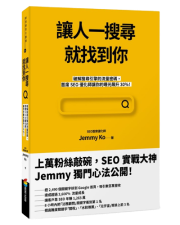
SEO is just three letters, but the whole thing could fill a 30,000-word research paper. At its core though, it all comes down to “quality.” Think of the entire internet as a library, and our articles are the books on the shelves. If you want to be found, you need to think of yourself as that book on the shelf — and figure out what would make someone pick it up. That’s the same thing as getting someone to click on your article.
The author says your article opening must be “super engaging” within 2 seconds. He used the word “super” — you can see how important it is. A normal way to put it would be “your opening should be engaging within 2 seconds.”
A title’s purpose is to get someone to read the first sentence. The second sentence exists for the third, and so on. Writing articles isn’t writing a diary — you need to lay out the logic, truly deliver on the headline’s promise, and “hook readers in” without turning it into clickbait.
Warning
Looking back, getting clickbaited seriously makes my blood boil.
The author mentions that some blog posts reek of “salesy vibes” — they’re written “for people to see” rather than “for people who want to see it.” Keyword stuffing leads to misleading clickbait. Only by understanding your reader and putting yourself in their shoes, then refining your writing, can you produce a truly good SEO article.
This runs completely counter to today’s world, where short-form videos dominate and people have no patience. And yet you’re supposed to write a long article? The author says his SEO articles routinely exceed 5,000 words, with long-form pieces reaching 10,000 words… that genuinely scared me.
Note
💡 If you can’t explain it to a six-year-old, you don’t understand it yourself — Albert Einstein
Explaining something to readers through “text” is harder than explaining it face-to-face. So you need to include images, use analogies and plain language (converting jargon into everyday terms), give answers quickly (front-load the value), and strip out all the technical terms.
Makes sense when I think about it. When I want to explain “what are stocks” to my kid, I follow the same steps:
So when I write articles, I need to imagine I’m talking to my son.
I used to think that promoting “financial planning” online meant teaching the full process clearly — income statements, balance sheets, cash flow statements. Turns out none of that matters, because it’s boring. Later I tried writing about “methods,” which helped a bit. But I discovered people want “tips and shortcuts,” not methods. Unfortunately, there are no shortcuts in money management — if there were, they’re either luck or scams.
Later, I wrote many “reflections” about my experience with financial planning — how it brought stability to my life, satisfaction to my mindset, and hope for the future. These “reflection” pieces got decent traffic.
The most powerful aspect of the author’s book is that everything is battle-tested. One day I saw on the author’s Facebook that he did a podcast interview. Listen to the whole episode, and you’ll understand: “Generous articles that hold nothing back will bring valuable traffic.”
The author shared tons of his real-world case studies, making it much easier for readers to understand how SEO actually works from start to finish. This makes SEO feel like something anyone can actually apply. This kind of open sharing brings a positive impact to the entire SEO market.
If everyone understood that “content” is the essence of SEO, the market becomes a survival-of-the-fittest scenario where the strong keep getting stronger. Because everyone would know that articles need to be on well-“researched” topics before being pushed into the library. The books people rush to reserve and borrow are the ones with powerful titles, solid content, and actionable results.
The goal of installing Google Search Console is to understand your own website — why people are coming, what keywords you rank for, your click-through rate, impressions, how many people find you, traffic trends, and more. Check the book for details. I actually knew about this tool before reading the book, but after reading it, I understand much better how to use it.
I’ve tried writing various articles in the past — some got traffic, some didn’t. Now, reviewing my old articles through Jemmy’s book, the ones with traffic were indeed “focused, researched, and knowledge-rich.” The mindset and personal reflection pieces had some scattered traffic too — not bad articles, but significantly less traffic than the “research-based” ones. Nobody really wants to listen to someone ramble. When people search, they want answers. It’s that simple.
Tip
A genuinely substantial article
is like a hidden gem restaurant in an alley,
amazing food — the shop doesn’t need to be fancy.
A scattered, unfocused article
is like a flashy roadside storefront,
beautiful exterior — but the food is nothing special.
I know Jemmy said not to write an intro or a conclusion, but after thinking it over myself, I feel this conclusion is a space for me to reflect — to write down some of my own personal views.
After reading this book, SEO doesn’t feel like some lofty, high-and-mighty discipline anymore. Instead, it feels more like a practice of focusing on yourself — valuing your own content, cherishing your own traffic, and being grateful for your readers’ trust.
That’s really all there is to it.
🔒 免費訂閱,隨時可退訂



The books I read may not be ones you need to buy, but if you do decide to purchase, I’d appreciate it if you use these links. This site uses a small amount of Google AdSense ads and affiliate marketing to support site operations and the Taiwan Fund for Children and Families’ child education charity!
📩 訂閱即送 · Lead Magnet
訂閱即送 「ETF 懶人投資工具包」(VT/VOO/QQQ/0050 速查表、投資前檢查清單、定期定額紀律表)。有值得講的才寄 · 隨時退訂。