SEO Field Guide: 5 Must-Learn Traffic-Doubling Tips from "Let People Find You with Just One Search"
In this article, you'll learn:
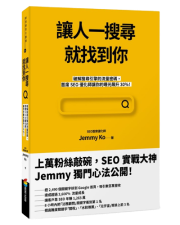
Table of Contents: “Let People Find You with Just One Search”
- Chapter 1: Ditch the Sales Pitch — Write Content People Actually Want to Read
- Chapter 2: Understanding SEO — Get Your Content Seen by More People
- Chapter 3: SEO in Action — Use Traffic to Crush Your Competition
- Chapter 4: Real Battles, Real Solutions
- 01 Before Learning SEO, You Need to Learn How to Write
- 02 Your Article Opening Must Be Super Engaging Within 2 Seconds
- 03 From Zero: How to Rank Your Keywords on Google
- 04 Be an Expert Who “Talks Like a 5-Year-Old”
- 05 The Most Beautiful Layout Is Rectangular
- 06 You Definitely Have Expertise — Just Write It Down and You’ve Already Won
- 07 Shout Your Flaws Out Loud, and You’ll Actually Sell Better
- 08 Little Tricks to Make People Read Your Entire Article Without Realizing It
- 09 High Traffic Comes from Good Reporting, Not Just Good Writing
- 10 Why Do SEO? Why Not Just Buy Ads to Airdrop to #1?
- 11 How Do You Use Facebook Posts for SEO?
- 12 Even a Kid Could Understand! How Google Search Engine Works
- 13 With So Much Content Online, How Does Google Decide Who Ranks #1?
- 14 How to Write Headlines Right? 9 Instant-Result Headline Techniques
- 15 Even Beginners Can Use It! The Most Underrated Internal Linking Optimization Technique
- 16 How Many Target Keywords Should Each Article Go After?
- 17 Long-Tail Keyword Strategy: How to Find, Rank, and Manage Them
- 18 9 Website Structure Optimization Tips That Don’t Require an Engineer
- 19 Which Platform Is Best for SEO?
- 20 SEO Technical Essentials You Can Understand Without Coding
- 21 Bet on It! A 100% Guaranteed Method to Rank Keywords #1
- 22 New Store Owner: How to Find the Right Keywords to Write About?
- 23 7 SEO Techniques to Blow Up Your E-Commerce Traffic and Hit Millions in Revenue
- 24 Stop Procrastinating — GSC Is a Must-Install Analytics Tool
- 25 Absolutely Don’t! 13 Mines Guaranteed to Destroy Your SEO
- 26 What Are Your Customers Really Thinking? Decoding SEO Search Intent
- 27 What Kind of Content Does Google Consider “Useful”?
- 28 Build Your Site’s Foundation by Weaving Knowledge Content into Your Sales
- 29 How to Update Existing Content for Maximum Traffic?
- 30 How “Oatmeal” Keywords Drove Over 2,600% Traffic Growth
- 31 An Aesthetic Clinic That Earned NT$12.63 Million Using SEO
- 32 I Ranked the Keyword “SEO” (27,000+ Monthly Searches) on Page One
- 33 How to Rank the Hot Keyword “Metaverse” on Page One
- 34 Ranking “Frozen Dumplings” #1 on Google — And Holding It for 3 Years!
- 35 13 SEO Techniques That Got “Mattress Recommendation” to the Top
- 36 A Mom of Two Making Over NT$80K Monthly from Blogging Alone
- 37 Testing It Myself: Ranking “Massage Chair Recommendation” #1
- 38 Finding the Right Spot: Getting “Honeymoon Phase” to #1
- 39 Writing Medical Content That Can Beat Actual Doctors
- 40 Using Generative AI to Hold a #1 Ranking for a Year — 556.73% Traffic Growth!
- 41 The Future of Search: Don’t Compete with Machines on Typing Speed
Takeaway 1: Put Yourself in Their Shoes
SEO is just three letters, but the whole thing could fill a 30,000-word research paper. At its core though, it all comes down to “quality.” Think of the entire internet as a library, and our articles are the books on the shelves. If you want to be found, you need to think of yourself as that book on the shelf — and figure out what would make someone pick it up. That’s the same thing as getting someone to click on your article.
Your Title Decides Whether Your Article Lives or Dies
The author says your article opening must be “super engaging” within 2 seconds. He used the word “super” — you can see how important it is. A normal way to put it would be “your opening should be engaging within 2 seconds.”
A title’s purpose is to get someone to read the first sentence. The second sentence exists for the third, and so on. Writing articles isn’t writing a diary — you need to lay out the logic, truly deliver on the headline’s promise, and “hook readers in” without turning it into clickbait.
Warning
Looking back, getting clickbaited seriously makes my blood boil.
Understand People’s Intent, Level Up Your Writing
The author mentions that some blog posts reek of “salesy vibes” — they’re written “for people to see” rather than “for people who want to see it.” Keyword stuffing leads to misleading clickbait. Only by understanding your reader and putting yourself in their shoes, then refining your writing, can you produce a truly good SEO article.
A Good SEO Article Needs Sufficient Word Count
This runs completely counter to today’s world, where short-form videos dominate and people have no patience. And yet you’re supposed to write a long article? The author says his SEO articles routinely exceed 5,000 words, with long-form pieces reaching 10,000 words… that genuinely scared me.
Note
💡 If you can’t explain it to a six-year-old, you don’t understand it yourself — Albert Einstein
Explaining something to readers through “text” is harder than explaining it face-to-face. So you need to include images, use analogies and plain language (converting jargon into everyday terms), give answers quickly (front-load the value), and strip out all the technical terms.
Makes sense when I think about it. When I want to explain “what are stocks” to my kid, I follow the same steps:
- Show him what stocks look like on screen (all the red and green numbers, the lines going up and down)
- Tell him stocks are bought with cash, and cash comes from his red envelope money (traditional Lunar New Year cash gifts)
- Tell him stocks can make his cash grow, so he can get more books or things he needs
- Throughout the process, there’s no mention of P/E ratios or candlestick charts.
So when I write articles, I need to imagine I’m talking to my son.
Writing from Experience Is More Effective Than Writing from Expertise
I used to think that promoting “financial planning” online meant teaching the full process clearly — income statements, balance sheets, cash flow statements. Turns out none of that matters, because it’s boring. Later I tried writing about “methods,” which helped a bit. But I discovered people want “tips and shortcuts,” not methods. Unfortunately, there are no shortcuts in money management — if there were, they’re either luck or scams.
Later, I wrote many “reflections” about my experience with financial planning — how it brought stability to my life, satisfaction to my mindset, and hope for the future. These “reflection” pieces got decent traffic.
Quick Summary: Writing Tips
- Super simple language (I sometimes wish I could just record it)
- Use plain, everyday words
- Use commas generously
- Use short sentences
- Section headings
- Bullet points
- Treat it like a report, not an essay — 70% research, 30% writing.
Takeaway 2
The most powerful aspect of the author’s book is that everything is battle-tested. One day I saw on the author’s Facebook that he did a podcast interview. Listen to the whole episode, and you’ll understand: “Generous articles that hold nothing back will bring valuable traffic.”
9 Headline-Setting Techniques
- Every page needs its own unique title (since I blog, that’s the article title)
- Titles must be precise (I used to play with wordplay; now I just keep it plain)
- Include only “one” keyword (I had zero concept of keywords before)
- Add numbers (I try to find them whenever possible)
- Don’t obsess over title character count (I never even had this thought)
- Find an eye-catching highlight
- Make good use of symbols
- Don’t get rigid with title formulas
- Keep it consistent with your < h1 > tag
Takeaway 3: Sharing Without Holding Back
The author shared tons of his real-world case studies, making it much easier for readers to understand how SEO actually works from start to finish. This makes SEO feel like something anyone can actually apply. This kind of open sharing brings a positive impact to the entire SEO market.
If everyone understood that “content” is the essence of SEO, the market becomes a survival-of-the-fittest scenario where the strong keep getting stronger. Because everyone would know that articles need to be on well-“researched” topics before being pushed into the library. The books people rush to reserve and borrow are the ones with powerful titles, solid content, and actionable results.
7 Techniques to Make Your Articles as Good as Books
- Choose the right keywords
- Identify derivative questions from your keywords
- Arrange questions in chapter order
- Original content — write it well, write it thoroughly
- Don’t overly praise your own service or product
- Don’t skip the “research”
- Don’t be lazy
Google Search Console Is a Must-Install
The goal of installing Google Search Console is to understand your own website — why people are coming, what keywords you rank for, your click-through rate, impressions, how many people find you, traffic trends, and more. Check the book for details. I actually knew about this tool before reading the book, but after reading it, I understand much better how to use it.
Quality Over Quantity — Because Google’s AI Won’t Forgive Bad Content
I’ve tried writing various articles in the past — some got traffic, some didn’t. Now, reviewing my old articles through Jemmy’s book, the ones with traffic were indeed “focused, researched, and knowledge-rich.” The mindset and personal reflection pieces had some scattered traffic too — not bad articles, but significantly less traffic than the “research-based” ones. Nobody really wants to listen to someone ramble. When people search, they want answers. It’s that simple.
Tip
A genuinely substantial article
is like a hidden gem restaurant in an alley,
amazing food — the shop doesn’t need to be fancy.
A scattered, unfocused article
is like a flashy roadside storefront,
beautiful exterior — but the food is nothing special.
Further Reading
Lazy Da’s Conclusion

I know Jemmy said not to write an intro or a conclusion, but after thinking it over myself, I feel this conclusion is a space for me to reflect — to write down some of my own personal views.
After reading this book, SEO doesn’t feel like some lofty, high-and-mighty discipline anymore. Instead, it feels more like a practice of focusing on yourself — valuing your own content, cherishing your own traffic, and being grateful for your readers’ trust.
That’s really all there is to it.
🚀 已有 1,000+ 讀者加入理財成長之路

You Buy a Book, and I Contribute to Charity Too


The books I read may not be ones you need to buy, but if you do decide to purchase, I’d appreciate it if you use these links. This site uses a small amount of Google AdSense ads and affiliate marketing to support site operations and the Taiwan Fund for Children and Families’ child education charity!