閱讀心得
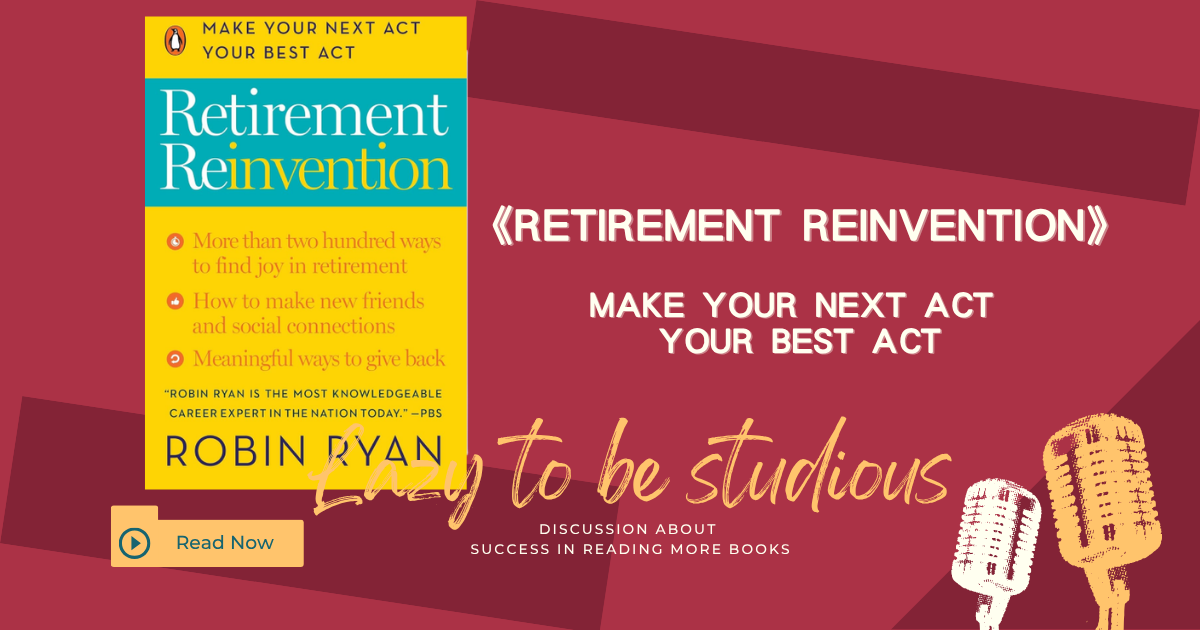
Is Retirement Planning Only About Money? 5 Key Strategies from "Retirement Reinvention" to Reshape Your Retirement Blueprint
Don't let retirement be just financial spreadsheets! This review of …
2026-01-31
4 分鐘 →
If you’re unhappy because you feel you have too little money, you might misunderstand the meaning of money. If you think more money equals more happiness, you might find it hard to be happy. Because money is just a tool, not the goal.
Ask yourself these questions:
If you answered “no” to any of these questions,
then this book is for you.
The above is an excerpt from the book, but I feel it’s profound, so I rewrote some of it. The main point is that “we earn money with our lives, every penny is earned with life, so we should cherish and use this money wisely” instead of squandering it arbitrarily.
Refers to a person’s knowledge, understanding, and ability in financial matters, including skills in financial planning, income and expense management, investment management, risk management, and tax management. Financial intelligence helps individuals or organizations better understand financial concepts, make informed financial decisions, and effectively manage and grow wealth.
Financial soundness here doesn’t mean “being rich.” The focus of financial soundness is whether you can spend money healthily, consciously, and distinguish between “necessary,” “needed,” and “wanted,” clearly understanding your relationship with money. This completely overturned my imagination of financial soundness, and you also need to know how your spending affects society (which is too difficult, most people don’t realize it).
Most people use “financial freedom” to describe this, and the meaning in the book is similar. It means having more time to spend on things you want to do and not spending too much time at work. This state usually involves having enough non-wage income. But the real purpose of having non-wage income is not to stop working entirely, but to not worry about money even if you work.
The financial interdependence mentioned in the book is quite interesting. It refers to being able to reinvest time into more social and interpersonal activities after achieving financial independence, rather than being detached from the community or society. I wonder… if I were a homebody and became financially independent, would I really do that?
Of course, you don’t have to believe everything in a book! There are valuable lessons, but also things we must critically think about. Like the financial interdependence in this book, for me personally, it means investing in writing and recording, so that more people have the opportunity to experience the beauty of finance. Maybe some people will spend all their money and return to being a corporate slave after achieving financial independence 😝
The book asks you to calculate how much money you can earn in your lifetime and then work backward to estimate your worth! This, to some extent, teaches you to recognize reality and know your own weight. So if you really can’t afford a sports car, it’s better to drive a regular car well. The real content is what we call assessing the current situation in financial planning, so we can know how to plan for the future.
This content has been written in many books, which means the future is hard to predict, and the past is hard to pursue. After the first step, you need to clearly know your net worth. Then decide whether to accept or change it. Usually, a positive person will choose to change, but you can also choose to accept the status quo passively.
The book says to create a budget. Creating a budget is rare in most people’s financial processes because there’s a misconception that there’s no point in budgeting when you have little money, unlike a company with a lot of money to budget. But this is important.
Starting to change here really means changing your mindset. Besides changing your mindset, you also need to change your behavior. One thing that impressed me was, “Is the money earned with time valuable? Does this value align with my life goals?” Many people may not have even thought about their life goals. If you really haven’t, think about it next time you’re alone. When your funeral is held, what would the sad family and friends in front of your photo want to say to you?
Visualizing your life is a slogan I wrote myself. What does visualizing your life mean? Simply put, it means keeping a record of your expenses! This way, you know where you’re squandering your precious life, just like this post says. Sometimes, keeping a record is just a short-term exercise. Understanding yourself through expense tracking is a good thing, but you don’t necessarily need to pressure yourself with frequent tracking. If you really don’t like tracking expenses, I’ll share other financial management methods that don’t require it.
While reading this book, I found this step and chapter quite silly. Living consciously here just means remembering to save money when spending. There are 10 ways to save money: don’t go shopping, live within your means, take care of what you already have, use things until they break, DIY is your sense of accomplishment, plan your needs well, research the cost-performance ratio, spend little money to buy good things, and meet needs efficiently. Let the above nine things be meaningful. Because the length is too long, I don’t want to say too much. In short, it’s telling us to save money. Saving money is not wrong in some ways because it’s a way to avoid waste, depending on the angle we take.
Maximizing your income means trying to earn as much money as possible, whether through side hustles, part-time jobs, or improving your skills. When I read this, I thought the book was contradicting itself. But after reading carefully, I found it wasn’t because its main purpose is in the next step called “invest in your life.” Here, maximizing income has a viewpoint that I think is quite good: people with lower salaries or incomes often don’t think there’s anything wrong with their abilities or status. Instead, they tend to think, “Why do people with high incomes seem to do nothing, but their income is higher?” This misconception can easily make you hesitate.
Investing in life, in other words, is using the money earned with your life to enrich yourself. The part of enriching yourself is to enable the four financial aspects— Financial Intelligence / Financial Soundness / Financial Independence / Financial Interdependence—to be realized. This chapter also writes about the benefits of compound interest and advises everyone to give back to society after having money, not to be a wealthy recluse.
I think the most important last step in this book is written for those who have won the lottery or are already financially independent. Continuously investing in yourself is very important, and the book mentions diversifying your intellectual property and assets.
Intellectual property means enriching your mind.
When I first read this book, the first half was mostly about the basics of financial planning, which is to assess the current situation. Many people don’t know how to assess the current situation or where to start, which is one of the pain points most people encounter in financial management.
The middle part of the article discusses the meaning of money and work, which is quite profound. The focus is on the relationship between work and money, avoiding work for the sake of money and avoiding the unconscious waste of money earned with life.
The last part of the book is the most outrageous. Originally, the first 2/3 were encouraging a minimalist lifestyle, but then there’s a twist, talking about how important it is to make money! Indeed, making money is very important, but you really need to avoid blindly making money.
I think some parts of this book could be shorter, especially since it’s a thick book with deep meanings. So I’ll summarize it for everyone:
Diagnose yourself well, don’t end it yourself.
Understand money well, don’t spend it foolishly.
Invest in yourself well, repeatedly invest in yourself.
🔒 免費訂閱,隨時可退訂


📩 訂閱即送 · Lead Magnet
訂閱即送 「ETF 懶人投資工具包」(VT/VOO/QQQ/0050 速查表、投資前檢查清單、定期定額紀律表)。有值得講的才寄 · 隨時退訂。