《Make Money and Earn Happiness》Review: Using the 80/20 Rule to Create Financial Freedom and a Happy Life
In this article, you'll learn:
Lazy to be Rich (懶得變有錢) Preamble
After finishing 《Make Money and Earn Happiness》, my thoughts are usually my notes, but the notes are my own digested content. So, if you find the content too long, you have the following options:
- Choose to read the context with markings, bold text, and tables.
- Quickly read the section titles (skim), and then read in detail the titles that interest you.
- Go directly to the conclusion.
And then buy a book for yourself to read.
Positioning the Coordinates for Your Life and Wealth
Father: Wealth and fame do not bring happiness. Teenage son: Have you tried it?
If you go to a money-related lecture, and the speaker asks you: Do you like money? Are you here working for money? You must answer: Yes! Please share more ways to increase money. No one works for anything other than money (the purpose of work is money, whether it’s entrepreneurship or employment, because without money we can’t get more resources).
Of course, if you are already financially free, you don’t have to work for money, but you are still producing different values to provide or create money.
There are actually only 4 things about money
- How to earn money
- How to save money
- How to invest
- How to enjoy
These four things seem easy, but why do so many people seem not particularly happy about this process?
Can Money Buy Happiness?
Becoming a millionaire is not easy, so this important question should be answered at the beginning. Unless you are born into a wealthy family, engage in illegal activities, win the lottery, or have a lucky streak at the casino, it takes years of hard work and sacrifice to achieve financial independence. Is it worth it? We often hear people say that money can’t buy happiness. Recent surveys on this topic show that money can indeed buy happiness. According to a report by HNW Digital in Newton, Massachusetts, 86% of the 8.6 million wealthiest people in the United States believe that financial success and security are important conditions for feeling happy, and 50% think it is very important. At the same time, 75% of the wealthiest Americans believe that the more wealth they accumulate, the happier they are. People who say money can't buy happiness either don't have money or don't know how to spend it.
Sour grapes won’t make you feel better. Grapes are still sweet!
LeBoeuf’s Law
Actively invest in your life, passively invest your money.
Actively investing in your life means deciding how to allocate your time, rather than using time based on a situation or someone else’s instructions.
Allocate Time to Four Activities
- Learning
- Earning money
- Living
- Giving back
These four activities are a bit like childhood, entering society, and middle and old age in terms of life course. Living is ubiquitous. However, the author’s point is still a principle concept, which sounds a bit like nonsense. (I am not judging the author, but principle concepts are inherently like nonsense. A kind of undeniable fact of nonsense or in other words.)
But why is this principle concept still needed? Because our lives are busy, busy at work! Busy after work! Busy when not working? Busy when not off work! So we are often overwhelmed by time. Reading is to find these principle concepts and put them back in our heads. If this can be named LeBoeuf’s Law, changing the name can also be called Lazy’s Law (懶得定律).
Money Should Be Passively Invested
If you really don’t have time to research investments, allocate your funds well. The author provides an investment ratio for your reference, but I often say that everyone’s financial DNA is different, so you can flip through the book yourself if you want to know this method. But the conclusion is to invest in ETF index funds.
The Key to Getting Rich: Strive for Simplicity
Simplicity is supreme, wow, this really fits my style completely. Laziness is a way of thinking, using more efficient ways to solve things you don’t want to do, so you can become a real lazy person. I didn’t expect the author to have the same idea as me.
80/20 Rule Pareto Principle
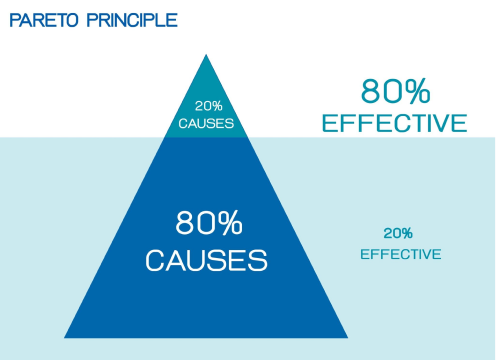
Doing the most important things first is the key to good time management, so the 80/20 rule is the key to time management. Success comes from investing time in a few high-value, high-return activities, and not worrying about other trivial items.
- Do 20% of small things affect 80% of your emotions in life?
- Do 20% of customers affect 80% of your company’s performance?
- Does 20% of the time affect 80% of the results of your work?
You should sit down and think about what is most related to increasing your money.
Most people should have heard of the 80/20 rule. If you are interested in this theory, you can take a look at the Pareto Principle. The conclusion is not to put too much time into things unrelated to money before you have enough financial freedom. If you have questions about this argument, you can also read 《Get Along Well with Money》 which mentions why you should unreservedly invest in things related to money first.
Rule of 72
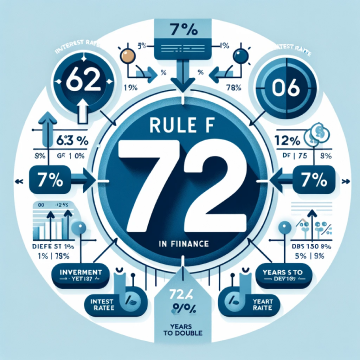
The Rule of 72 is a simple formula used to estimate how long it takes for an investment at a fixed interest rate to double. The formula is to divide 72 by the annual interest rate percentage, and the result is the approximate number of years required. For example, if the annual interest rate is 6%, then 72 divided by 6 equals 12, which means it takes about 12 years for the investment to double.
| Annual Interest Rate (%) | Years Required (Years) |
|---|---|
| 1 | 72 years |
| 3 | 24 years |
| 8 | 9 years |
| 12 | 6 years |
| 24 | 3 years |
You can convert it yourself from the table. If you are purely saving, you have no chance to increase your assets in the current interest rate environment. It will take 72 years for NT$100,000 (USD $3,076) to become NT$200,000 (USD $6,153)? Then you might as well be reborn. But don’t worry, if you were born after 2000, you have a chance.
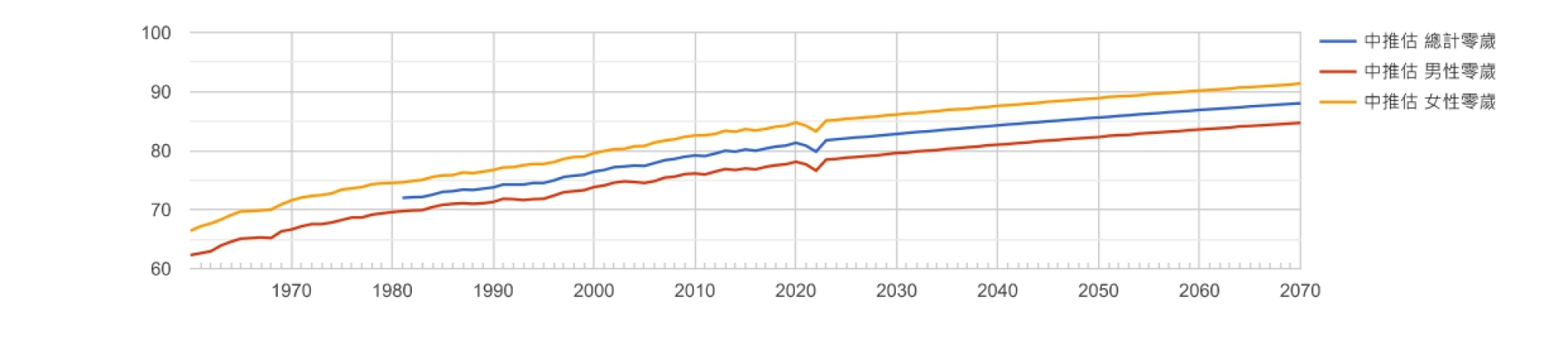
Your Lifespan is Beyond Your Imagination
According to magazine reports, you born after 2000 may live up to 100 years old. What is the concept of 100 years old? According to the current work level, 65 years old is the retirement age, and the retirement savings to be prepared are until 80-85 years old. However, if you were born after 2000, would you want to start working at 25 and work until 85 and then prepare retirement savings until 100? Just thinking about working for 60 years makes me dizzy… (Maybe in the future we will all start supporting euthanasia programs… I decide my own life)
How to Spend Money
In the beginning, your money must be invested without hesitation in places that can increase money. You will find that if it is a company, they will have retained earnings for the development of the company, instead of sticking to the old business model and waiting to live off the old capital.
Putting the money you earn into places that can make money is necessary when you are young, because you will need this money more when you are old and have no productivity. Postponing enjoyment does not mean not enjoying it. If you die before enjoying it, it can only be said to be fate (usually no one expects to have a short life, right?)
Each of our income and expenditure is like a company. You must maximize your productivity when you are most productive, and then invest this money into your capital expenditure, and then wait for it to grow and recover. (It’s like planting a tree, but how many people’s money is like planting guava)
Have You Ever Thought About What Kind of Life You Want?
I Think This Story is So Annoying

An American was walking on the dock of a coastal village in Mexico when a small boat with just one fisherman docked. Inside the boat were several large yellowfin tuna. The American complimented the fisherman on the quality of his fish and asked how long it took him to catch them. The fisherman replied, “Only a little while.”
The American then asked why didn’t he stay out longer and catch more fish?
The fisherman said he had enough to support his family’s immediate needs. The American then asked, “So, what do you do with the rest of your time?” The fisherman said, “I sleep late, fish a little, play with my children, take siesta with my wife, Maria, and stroll into the village each evening where I sip wine and play guitar with my amigos. I have a full and busy life, señor.”
The American scoffed, “I am a Harvard MBA and I can help you. You should spend more time fishing and with the proceeds, buy a bigger boat. With the proceeds from the bigger boat you could buy several boats. Eventually you would have a fleet of fishing boats. Instead of selling your catch to the middleman you would sell directly to the processor, eventually opening your own cannery. You would control the product, processing and distribution. You would need to leave this small coastal fishing village and move to Mexico City, then Los Angeles and eventually New York City where you will run your expanding enterprise.”
The fisherman asked, “But, señor, how long will this all take?” To which the American replied, “15 – 20 years.” “But what then, señor?”
The American laughed and said, “That’s the best part. When the time is right you would announce an IPO and sell your company stock to the public and become very rich; you would make millions.”
“Millions, señor? Then what?”
The American said, “Then you would retire. Move to a small coastal fishing village where you would sleep late, fish a little, play with your kids, take siesta with your wife, and stroll into the village in the evenings where you could sip wine and play guitar with your amigos.”
I pulled up a chair and sat in the American’s position in this story. Are you the Mexican?
Take the story as a reference. Not everyone needs a very rich life, and not everyone needs a life without work, because everyone's life is different from the moment they are born. Just like there are no 100% identical DNAs in the world. Your financial DNA is also different from others.
Think about how you want to live your life! Don’t live one day at a time.
How to Turn Dreams into Goals
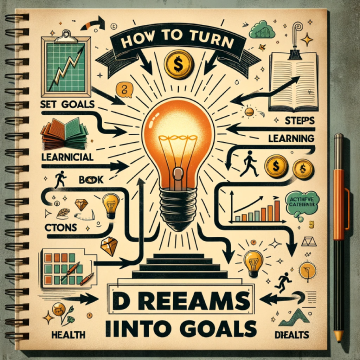
- Make sure the goal is what you want and it is your personal goal
- Don’t set goals in other people’s eyes, just like the goals that uncles, aunts, and cousins ask about during the Lunar New Year.
Set a goal for your life with the BEST formula- Believable: Don’t set the goal too short-sighted. You can probably achieve more than you imagine. Set the goal far, but don’t set an impossible goal. The battle must be big enough to have weight, but small enough to be won.
- Energizing: Set goals that can energize you, making you eager to try every morning when you wake up.
- Specific: Define and quantify successful actions.
- Timed: Every goal should have a final completion date. If not, it is not a goal, but a fantasy.
- Write down your goals and review them often
- Set goals in all areas of life
| Goal | Goal Content | Key Points to Check | Action Plan |
|---|---|---|---|
| Career Goal | Salary, Vacation, Efficiency | Whether it is feasible, whether it meets personal needs | Set specific target values, develop strategies to achieve them |
| Family Goal | Interaction, Getting Along | Whether it is reasonable, whether it can be achieved | Regularly arrange family gatherings, plan parent-child activities |
| Entertainment Goal | Leisure, Travel | Whether there is enough time, whether it fits the budget | Develop travel plans, arrange leisure activities |
| Health Goal | Weight, Health Checkup | Whether it is healthy, whether there is enough willingness | Develop exercise plans, have regular health checkups |
| Community Goal | Giving Back, Participation | Whether it fits personal interests, whether there is enough time | Find volunteer opportunities, join community activities |
| Relationship Goal | Interaction, Contact | Whether there is enough time, whether there is enough willingness | Contact friends regularly, arrange gatherings |
| Self-Realization Goal | Growth, Progress | Whether there is enough time, whether there is enough willingness | Find interest courses, participate in training courses |
| Spiritual Goal | Faith, Values | Whether it fits personal beliefs, whether there is enough willingness | Regularly participate in religious activities, read related books |
Check whether the goals are compatible with each other, and prioritize
When setting goals, you can first check whether the goals are compatible with each other. For example, whether career goals and family goals will conflict with each other. If so, you need to adjust the goal content or priority.
Turn goals into action plans
After the goals are set, you also need to turn the goals into action plans in order to achieve the goals more effectively. The action plan can include the following content:
- Specific content and timetable of the goal
- Resources required to achieve the goal
- Steps required to achieve the goal
- Evaluation methods to achieve the goal
By developing an action plan, we can help us achieve our goals more efficiently.
Okay! Have you noticed that this paragraph is also a conceptual principle (that is, nonsense), but I still like and appreciate this book very much. It really makes you remember what you have done less or more.
Practice of Action Plan

- Clearly and specifically write down the goals you want to achieve next year.
Why do you want to achieve this goal?(I personally think why is the most important)- If successful, what can this goal do for you?
- What do you think is ordinary success? Very successful? And very successful? Answer specifically.
- How much do you want to achieve the goal?
- How does achieving this goal contribute to achieving life goals?
- What is the cost of completing this goal? Are you willing to pay?
- Assess the chances of achieving the goal?
- What will happen if it doesn’t succeed? Can you bear it?
- List the secondary goals required to complete the main goal and set a target completion date.
- What are the obstacles to completing the goal?
- What can you start doing today to move towards the goal?
Accumulate Life’s Chips
- Get a good education, but you don’t have to spend money to go to a very expensive school
- Choose the right career
- You will enjoy it or think it is meaningful
- You are interested in
- The most that allows you to play
- Let you have a sense of accomplishment
- Let you have the lifestyle you want
- Stay healthy
- Choose to live in a place with lower living expenses (save costs)
Find someone who is simple and also yearns for financial freedom to work hard together (either choose a wife who is a financial advisor, or find a financial advisor)- Find a suitable house to rent or buy
- Don’t have too many children (it costs about NT$6 million (USD $184,615) to raise one in Taiwan)
Work Hard to Simplify and Save Money
Good Way to Save Money VST
- Vision
- Strategy
- Tactics
Saving money is actually not saving money from another perspective. If the boss pays you for your work, then saving money is to allow “yourself” this company to have retained earnings to expand the company’s operations.
Increase Your Time Value
- Let your boss understand your value and talk about your work remuneration through the display of value.
- Let yourself have a second skill to increase extra income
- The key to building personal value
- What do you do?
- How well do you do it?
- How irreplaceable are you?
9 Key Points to Increase Time Value

1. Focus on your employment competitiveness, not how much employment security you have
2. The essence of making money comes from continuous learning
Asking successful people for advice is one of the ways to shorten the learning curve
Learning is a cost, whether it is reading or self-study. If you have the opportunity, asking successful people for advice is the best way. You can ask him the following questions:
- What is the most valuable lesson you have learned about success?
- What helped you the most when you were still learning?
- What is the biggest mistake to avoid? What is the biggest obstacle to overcome?
- Who else do you suggest I talk to?
- What books or magazines can I read?
- What courses do you suggest I learn about?
- What clubs or professional associations can I join?
- How to always stay ahead?
- If you can only give one piece of advice to someone who wants to enter this industry, what would you say?
3. Create a second income
Create your own second income, whether it is investment income or entrepreneurship (if it is a part-time job, I personally think the necessity is relatively low). By creating a second income that can be controlled, you can gradually reduce the risks brought about by office uncertainty.
4. Creating more than you receive is a positive cycle
Build a personal brand
Develop horizontal loyalty
Be a pragmatic visionary
Use feedback as a basis for improvement
Understand your value, don’t be afraid to leave
Do Less, Do Better
An expert stood in front of the students and said, “Okay, it’s time for a quiz.” He took out a gallon-sized wide-mouth jar and placed it on the table, then took out a dozen or so fist-sized rocks and placed them in the jar one by one.
When the rocks filled the entire jar and could no longer fit in, the expert asked, “Is the jar full?” The students in the class all said, “Yes.”
The expert asked again, “Really?” Then he took out a bucket of gravel from under the table, poured some gravel into the jar, and shook the jar to let the gravel fill the gaps between the rocks. Then the expert asked the students again, “Is the jar full?” This time, one student said, “Maybe not.”
“Very good.” The expert then took out a bucket of sand from under the table and poured the sand into the jar, filling the space left by the rocks and gravel. Then he asked again, “Is the jar full?”
The whole class responded loudly, “No.”
“Very good!” This time the expert took out a pot of water and poured it into the jar until the water filled the mouth of the jar.
The expert looked at the students and asked, “What is the point of this demonstration?”
A brave student raised his hand and said, “No matter how full your schedule is, you can still fit more things in as long as you try your best to arrange it.”
The expert replied, “Wrong! The point is, if you don’t put the rocks in first, you will never be able to put them in.” What are the “big rocks” in your life? The project you want to complete? Time with your loved one? Your faith? Your education? Or your finances? Remember to put these big rocks in first, otherwise you will never have a chance.
Tonight or tomorrow morning when you savor this little story, ask yourself: What are the “big rocks” in my life or career? Put them in the jar first.
Big Rocks in Life
Peter Drucker: “Time is the most basic. Unless you manage your time well, you can’t manage anything.”
- Decide what is most important
- Set goals and priorities, and do the most important things
- Do the most important things in the most efficient way
Avoid Time Management Traps
Trap 1: Mixing up activities and productivity is the most common thing that happens. You often hear “I’m so busy, I’m so busy” but it’s true that you’re really busy, but you don’t see any results.
Trap 2: Confusing urgent and important. You shouldn’t let urgent things keep happening, which means important things are not being done at all.
The Secret to Less is Better
- Have a quiet time every day to reflect and plan for the future (or tomorrow’s affairs)
- Give yourself more time to do the most important things
- Make full use of golden time (usually refers to the morning, like I love to get up between 4 and 5 o’clock, I can do a lot more things)
- Say no to unimportant things
- The calendar should be looser, and there should be a backup plan
- Focus on important matters
- Automate repetitive trivial tasks as much as possible (learning some small programs or tools is great)
- Except for what you are best at, try to delegate the rest
- Cut the Gordian knot (throw away all the things that are not used, and it takes time to find things that are piled up in a mess)
- Take action to block interference (don’t let 3C or notifications constantly disturb you when you are working, I personally love the do not disturb mode)
- Make good use of electronic communication tools, don’t be a slave to tools (I sometimes leave my phone alone or turn on do not disturb for a whole day, enjoying the feeling of concentration)
- Always ask yourself: “How should I use my time and energy now in the best way?”
- Don’t take time for granted
Imagine there is a bank that deposits NT$86,400 (USD $2,660) into your account every morning. There is no balance left every day, and you cannot keep cash. Every night, the part you don’t spend is written off. What would you do? Of course, withdraw every penny. Well, everyone has such a bank, and its name is time. Every morning, it gives you 86,400 seconds. Every night, even if you don’t use it, it is written off. There is no balance to take away, and you cannot overdraw. If you don’t make good use of your deposit, it’s your loss. You can’t go back to the past, and you can’t keep it for tomorrow’s withdrawal. You must live in the present and make good use of today’s deposit.
To understand the value of a year, ask a student who didn’t do well on the final exam. To understand the value of a month, ask a mother who gave birth prematurely. To understand the value of a week, ask the editor of a weekly magazine. To understand the value of an hour, ask a lover waiting to meet. To understand the value of a minute, ask someone who missed a train, bus, or plane. To understand the value of a second, ask someone who survived an accident. To understand the value of a millisecond, ask an athlete who won an Olympic silver medal. Yesterday is history. Tomorrow is a mystery. Today is a gift. Therefore, today is called Present. Cherish every moment you have, and cherish it even more if you can share it with someone special. Remember, time waits for no one. Yesterday is a canceled check. Tomorrow is a promissory note. Today is the cash on hand, so spend it well.
Make Good Use of Unexpected Things
The entire chapter: positive, optimistic, seize the time, reduce time complaints, cherish the present time.
Recognizing the Market is Better Than Beating the Market
The entire chapter: Don’t think about having to beat the market, the market will give you enough returns.
Let your money work for you
Have Comprehensive Insurance
The entire chapter: Buy good life insurance, buy good medical insurance, buy good critical illness insurance, buy good disability insurance, buy all kinds of risks you cannot afford.
Spending money to let the insurance company bear the risk is the most magical thing in the world
The purpose of insurance is to protect our assets, not to gamble with the insurance company on the probability of occurrence. Don’t put the consideration of insurance on whether it will happen, because if it will happen, shouldn’t you buy more now?
Listen to People Who Understand the Market
Ah Ming went to Ah Hua’s deli and asked Ah Hua Tan, “Why are you so smart about money?” Ah Hua Tan hesitated for a moment, thought about it, and then replied, “I eat a lot of salmon.” For the next few weeks, Ah Ming went to the deli every day and ate a lot of salmon. One day, Ah Ming walked into the store very angrily and questioned Ah Hua, “How dare you sell me expensive salmon! Ah’s deli sells the same thing for half the price.” Rubinstein smiled and replied, “Look, you’ve become smarter!”
If you want to be a rich and leisurely person, you must:
- Only listen to good sources of information, and reject all other information (but the information on this blog and Podcast is a good source)
- Only nod to a few money-making opportunities, and ignore the others (don’t be greedy, or you will be deceived)
- Know what kind of legal and financial advisors you really need.
- Get the necessary advice and assistance at a reasonable price.
Don’t ask a barber, “Should I get a haircut?” You need to pay a third party without prejudice to provide objective information and advice, which is what you really need (but no one’s time is free, you should pay for expertise)
Money-Grabbing Masters
These people will want to take your money away if your heart is still greedy.
- Eloquent
- Seminar masters and TV celebrities
- Multi-level marketing companies
How to avoid or recognize these people
- Deliberately create the appearance of a rich person
- Wrap yourself in the national flag and wear your faith on your body
- Very emphasis on motivational materials, dreams, and the power of faith. (Editor’s note: Does faith in financial planning count?)
- Vague answers to specific questions
- If someone says their chances of success are low, they unanimously slander or criticize someone
- Buy, buy, buy, keep buying
Seven ways to protect yourself
- Be a critical thinker
- Do your homework
- Ask clear questions and get answers
- Talk to the testimonials provided by the seller, but be skeptical
- Resist the pressure tactics that ask you to sign immediately
- Don’t invest in something you don’t understand
- If a business or investment opportunity can pass the above hurdles, you may want to listen to the opinions of professionals (reduce your own opinions, because opinions usually come from greed)
The advice you really need
- Complete financial planning
- Tax planning
- Estate planning
- Investment advice
Act Immediately
When should you start your plan? Now! At the moment!
Sailing to the Ranks of Winners
- Leave your comfort zone
- Be firm and decisive, and take action
- Judge your performance on these ten choices and give a score
- Live the life you want
- Accumulate life chips
- Save expenses and work hard to save money
- Increase your time value
- Do less and do better
- Make good use of unexpected things
- Recognizing the market is better than beating the market
- Have comprehensive insurance
- Listen to people who understand the market
- Act immediately
- Track, celebrate, and reward your progress
- Enjoy it
- Focus on the ultimate goal
- Stay motivated
- Pursue excellence, but not perfection
Author’s Conclusion 4 Essentials
- Maintain financial independence
- Maintain an active body and mind
- Enjoy the pleasure of giving back
- Make life a joyful journey
Further Reading
Book Purchase Link