The Geek Way Book Review: How Bezos and Musk Built Billion-Dollar Empires with 4 Core Principles
In this article, you'll learn:
Table of Contents
- Foreword by Reid Hoffman
- Introduction: The Misunderstood Revolution
- CH1 Four Paths to the Geek Way
- CH2 Tuning to Optimal: Performance and Culture in Geek Companies
- CH3 Super and Ultimate: New Ways of Thinking
- CH4 Science — Press Secretaries and the Iron Law
- CH5 Ownership — Dismantling Giant Machines Run by Dwarves
- CH6 Speed — From Lying to Learning
- CH7 Openness — A Better Business Model
- Conclusion: Even If You Can’t Live Forever, Live with Vitality
Why I Wanted to Read This Book
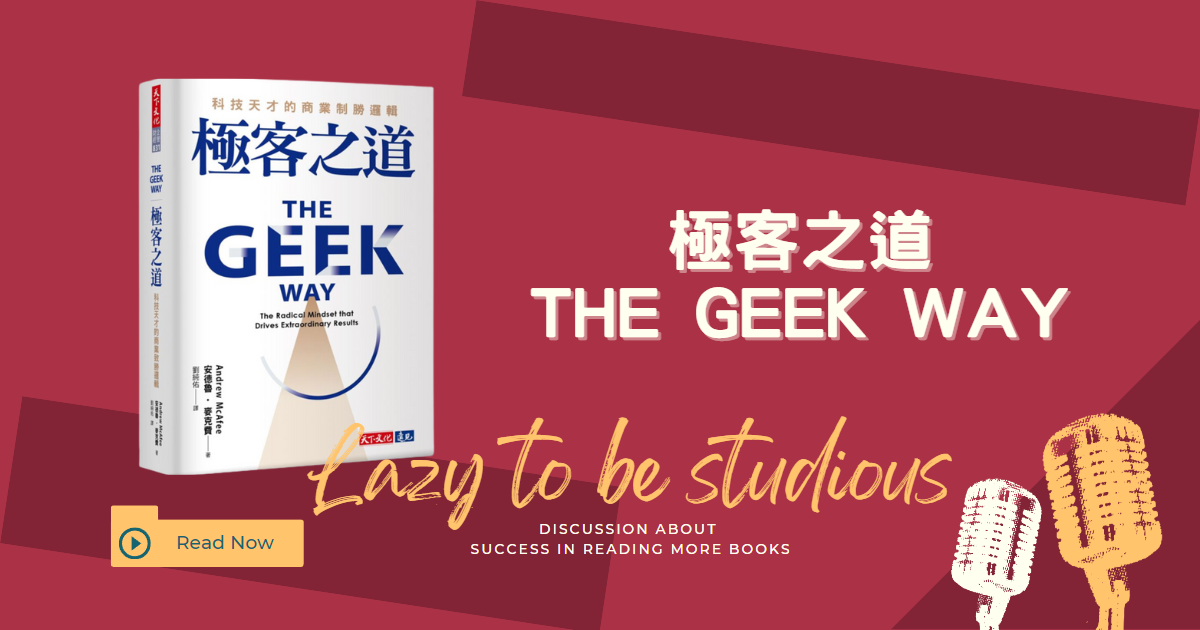
The Geek Way — when I first saw the title, I didn’t even realize it was about GEEK culture. The back cover reads: “Once upon a time, geeks were the oddballs — the ones considered too smart, too dorky, or too socially awkward. But today, these very people dominate the business world. Whether it’s Bezos, Musk, Hastings, or Nadella, they all run some of the world’s most valuable companies, creating geek enterprises that have disrupted traditional business.” That line hooked me. I wanted to understand how these business titans built their empires. Each of them has a very distinctive personality, and their corporate cultures are frequently covered by the media. But as it happens, these “Geeks” are the ones steering the information and AI era. As someone who also leads a software team — and has often felt like I’m speaking Martian — I was curious: why is it that “Geek,” a term that literally means “abnormal person,” has become the culture driving modern civilization?
Info
Geek originally meant an abnormal person in slang.
In American slang, the word refers to someone with superior intelligence who loves deep research but isn’t great at socializing — it carried a negative connotation because geeks tend to dive deep into their interests, sometimes at the expense of personal hygiene, social skills, or social status (though not all geeks do this). In recent years, however, as internet culture has risen, the negative connotation has faded.
The word still retains its original meaning of exceptional intelligence and effort, and is typically used to describe people with a passionate interest in computers and internet technology who invest massive amounts of time into research. Hence nicknames like computer geek, techno-geek, gamer geek, etc. — Wikipedia

What Is The Geek Way About?
Overview of The Geek Way
The author, Andrew McAfee, holds a bachelor’s degree in electrical engineering, a master’s degree in management, and a doctorate in business administration — all from Harvard. He’s the co-founder and co-director of MIT’s “Initiative on the Digital Economy” and was the inaugural visiting scholar of Google’s “Technology and Society” group. He’s an author who straddles both computing and business, consistently exploring the relationship between digital technology and society.
The Four Fundamental Paths of The Geek Way
- Science: Abandon seniority, charisma, morality, and aesthetics — let evidence do the talking.
- Ownership: Stop the endless coordination and communication — let every team member take action.
- Speed: Iterate quickly, accelerate learning and progress, and disrupt competitors.
- Openness: Share information and welcome challenges to the status quo instead of being defensive.
How Does The Geek Way Address Human Overconfidence and Confirmation Bias?
Science
The Geek Way tackles human overconfidence and cognitive bias by emphasizing evidence-based debate, which leads to better decisions, predictions, and judgments.
Because humans evolved to display confidence within groups, we are naturally prone to overconfidence. Our brains also tend to defend our own ideas rather than objectively evaluate them, leading to confirmation bias.
To combat these tendencies, The Geek Way advocates the scientific method as one of its core behavioral norms. This norm emphasizes evidence-based debate rather than relying on seniority, intuition, or other non-evidence-based arguments.
Speed
The Geek Way emphasizes speed and iteration as a key behavioral norm that further addresses overconfidence and confirmation bias. By iterating quickly and gathering customer feedback, geek companies create an environment of continuous learning and adjustment. This iterative process allows frequent testing and validation of ideas and assumptions, reducing reliance on inaccurate or biased beliefs.

How Does The Geek Way View and Address Corporate Bureaucracy?
The Geek Way sees corporate bureaucracy as a barrier to growth and takes proactive measures to reduce it, fostering efficiency and innovation. They view bureaucracy as an obstacle that prevents rapid action and seizing opportunities.
The Geek Way’s Perspective on and Approach to Bureaucracy
- Bureaucracy Is the Result of Status-Seeking: The Geek Way recognizes that despite being frustrating and harmful to efficiency, companies naturally become overly bureaucratic. They attribute this to human nature as social animals who inherently crave status. In companies, this status-seeking manifests as creating unnecessary positions and processes that give individuals influence and importance, even when these don’t contribute to overall objectives.
- Embracing Ownership to Combat Bureaucracy: To address excessive bureaucracy, The Geek Way advocates an ownership culture. In this culture, individuals are given clear responsibilities and autonomy to accomplish agreed-upon goals. This reduces the need for cumbersome processes, coordination, and cross-functional communication — the typical breeding grounds for bureaucracy.
- Limiting Coordination and Communication: The Geek Way is generally cautious about excessive coordination and communication between teams or with senior management. They believe that while some communication is necessary, too much leads to bureaucratic bloat as individuals and teams try to protect their interests or pass decisions to others.
- Implementing Rigorous Goal-Setting Frameworks: To ensure autonomous teams stay aligned with overall company objectives, The Geek Way relies on robust, well-defined goal-setting frameworks. Frameworks like OKRs (Objectives and Key Results) help translate high-level vision and strategy into team-level specific actions, providing clear direction and alignment without relying on excessive coordination or bureaucratic controls.
In summary, The Geek Way views bureaucracy as a cultural barrier that stifles innovation and growth. They actively combat it by cultivating an ownership culture, limiting excessive coordination, and implementing rigorous goal-setting processes to create a more agile, efficient, and results-oriented work environment.

Personal Thoughts and Takeaways
The book discusses a lot about cultivating corporate culture and how software teams can quickly get effective feedback to challenge themselves into becoming successful enterprises. I work at a software company myself, but regardless of whether you’re in software, I believe the 4 fundamental paths of The Geek Way are principles worth applying to anything we do.
We live in an era of information explosion. Only by moving fast, fast, fast can we discover sooner whether a decision succeeds or fails — and quickly course-correct from failures. That’s the concept of rapid iteration.
Our lives can also benefit from this approach of experiencing quickly and trying constantly to gain more experience.
The V2MOM Principle Also Applies to Personal Goal Setting
If we apply the concept of “begin with the end in mind” to life, we can use V2MOM’s five steps (Vision, Values, Methods, Obstacles, Measures) as a framework for personal goal-setting:
1. Vision:
Companies need clear goals, and so do individuals. For example, set a goal you want to achieve and ask yourself: “What is my vision?” “What kind of person do I want to become?”
2. Values:
After setting your vision, think about what values support it and rank them by importance. Values often include things like: honesty, respect, responsibility, fairness, empathy, diligence, innovation, etc.
3. Methods:
List all the actions and steps needed to achieve your vision and values, and prioritize them.
4. Obstacles:
Anticipate potential challenges, problems, and issues, and think about how to overcome these barriers — especially the most critical ones.
5. Measures:
Set clear metrics to determine success and use data and indicators to track progress.
V2MOM provides a simple, easy-to-understand framework that helps individuals set clear goals and plan concrete steps to achieve them. By continuously reviewing and adjusting your V2MOM to ensure it aligns with your values and goals, you can ultimately realize your vision.
Further Reading
Lazy Da’s Conclusion

🚀 已有 1,000+ 讀者加入理財成長之路
Buy the Book