
Read It and Forget It? How to Build a Knowledge Compound Interest System with 6 Steps from How to Take Smart Notes
In this article, you'll learn:
Table of Contents
- Author’s Preface for the Traditional Chinese Edition
- Foreword
- Writing and Learning
- Everything You Need to Know About Writing
- 1.1 Good Writing Is Actually Simple
- 1.2 The Slip-Box
- 1.3 How the Slip-Box Note System Works
- Everything You Need to Do for Writing
- 2.1 Steps for Writing a Paper
- Everything You Need for Writing
- 3.1 The Toolbox
- A Few Things to Keep in Mind Before You Start
- Four Underlying Principles
- Principle 1: Writing Is the Only Thing That Matters
- Principle 2: Simplicity Is Paramount
- Principle 3: Nobody Ever Starts from Scratch
- Principle 4: Let the Work Carry You Forward
- Six Steps to Successful Writing
- Step 1: Separate and Interlocking Tasks
- 9.1 Give Each Task Your Undivided Attention
- 9.2 The Downside of “Multitasking,” Saved by the Slip-Box
- 9.3 The Slip-Box Helps You Apply the Right Focus to Each Task
- 9.4 The Slip-Box Paves the Way to Becoming a Smooth Expert
- 9.5 Enhance Your Memory with the Slip-Box
- 9.6 Let the Slip-Box Help You Reduce Decision-Making
- Step 2: Read for Understanding
- 10.1 Read with a Pen in Hand
- 10.2 Keep an Open Mind
- 10.3 Find the Gist
- 10.4 Learn How to Read
- 10.5 Learn from Reading
- Step 3: Take Smart Notes
- 11.1 Aim to Write One Note at a Time
- 11.2 Think Outside Your Head
- 11.3 Don’t Learn by Rote
- 11.4 Add Permanent Notes to the Slip-Box
- Step 4: Develop Ideas
- 12.1 Develop Topics
- 12.2 Make Smart Connections
- 12.3 Compare, Correct, and Differentiate
- 12.4 Assemble a Thinking Toolbox
- 12.5 Use the Slip-Box as a Creativity Machine
- 12.6 Think Within the Slip-Box
- 12.7 Breed Creativity Within Constraints
- Step 5: Share Your Insight
- 13.1 From Brainstorming to Slip-Box Storming
- 13.2 From Top-Down to Bottom-Up
- 13.3 Just Follow Your Interest
- 13.4 Finish and Review
- 13.5 Abandon Planning, Become an Expert
- 13.6 Actually Write
- Step 6: Make It a Habit
- Afterword
- Appendix: A World First Exclusive Look into Professor Luhmann’s Slip-Box, Plus a Note on Software
Why I Wanted to Read How to Take Smart Notes
My Pain Point
The reason I wanted to read this book goes back to when I changed my reading approach. I’ve always enjoyed reading, but I kept feeling that after finishing a book, sharing a book review was incredibly difficult — I’d read and forget. My bookshelf is full of books I’ve read, but when it comes time to share, I barely remember the content.
When I wrote this review, I had finished the book and was deeply committed to using the methods described within it. I wrote this review using notes I took through those methods, while trying my best not to flip back through the book.
I think this method is extremely difficult at first. Even though it seems as simple as “write down everything you want to remember,” when you actually try, you initially face the awkward situation of “having no idea what to write down.” But once you start, the problems get resolved one by one.
What I Hoped to Learn Before Reading
- I wanted to solve my long-standing problem of reading and forgetting
- I wanted to have more material to draw from when communicating with others
- I enjoy writing and sharing, and I hoped How to Take Smart Notes would help me level up these skills

What Is How to Take Smart Notes About?
Book Introduction
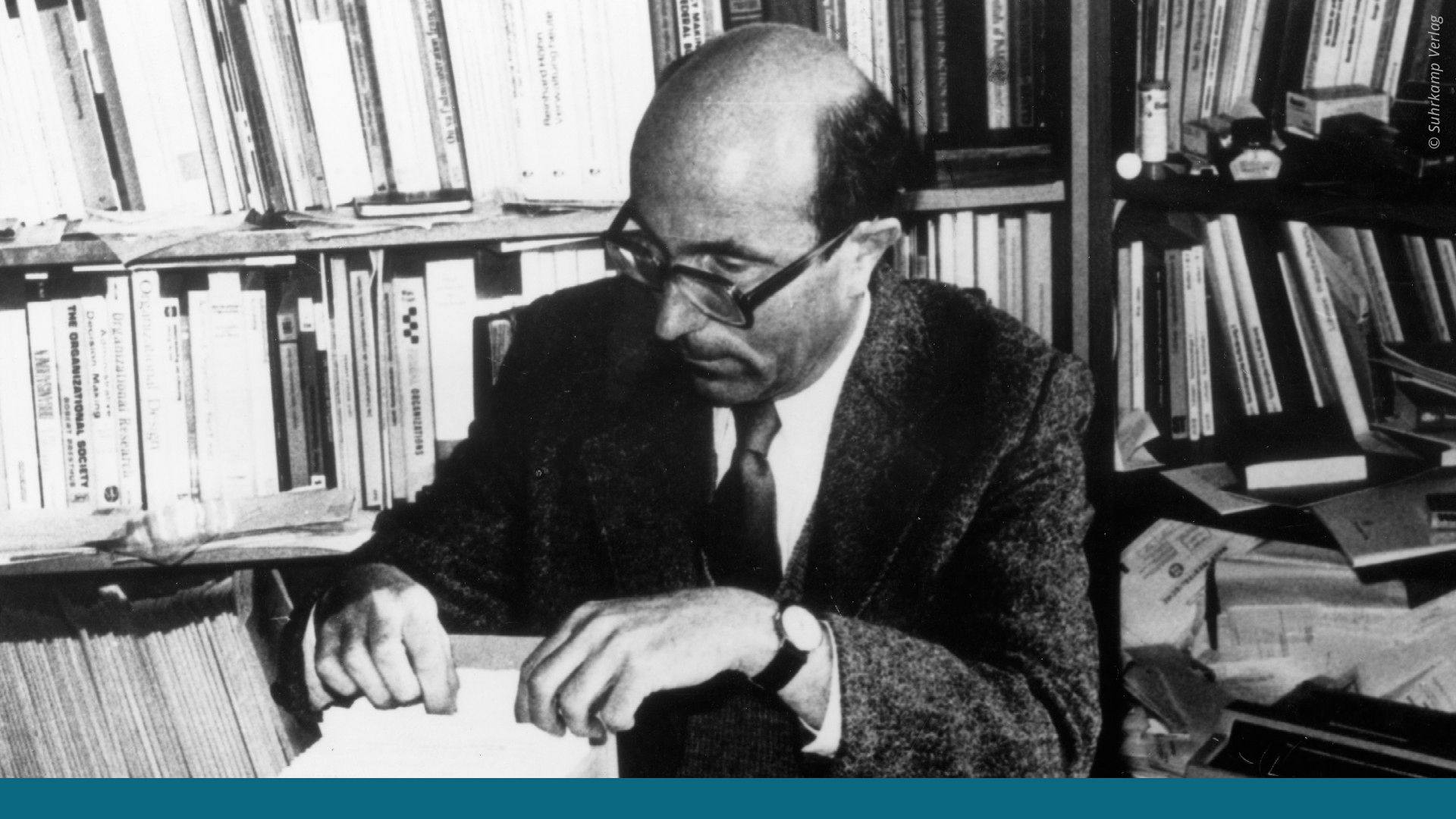
The author, Sönke Ahrens, is a lecturer in philosophy of education at the University of Duisburg-Essen in Germany. How to Take Smart Notes was published after he studied the note-taking methods of German sociologist Niklas Luhmann (1927–1998) from another university.
Niklas Luhmann published 58 books and numerous articles within 30 years, covering topics including religion, education, political science, and more.
What fascinated me most was that his incredible productivity came from the “Zettelkasten” — the slip-box note system.
Who Was Niklas Luhmann?
Niklas Luhmann was born on December 8, 1927, in Lüneburg, the son of a brewery owner, and passed away on November 6, 1998, in Oerlinghausen near Bielefeld. At 17, he was drafted as a Luftwaffe auxiliary and became an American prisoner of war in 1945. From 1946 to 1949, he studied law in Freiburg and completed his clerkship training. In 1952, he began building his famous slip-box system. From 1954 to 1962, he worked as an administrative official in Lüneburg, first at the Lüneburg Higher Administrative Court and later as a parliamentary advisor at the Lower Saxony Ministry of Culture. In 1960, he married Ursula von Walter. They had three children. His wife passed away in 1977.
Luhmann received a research fellowship at Harvard University in 1960/1961. There, he came into contact with Talcott Parsons and his structural-functional systems theory. In 1964, he published his first book, Functions and Consequences of Formal Organizations. In 1965, Luhmann was appointed by Helmut Schelsky as department head at the Social Research Institute in Dortmund. In 1966, Functions and Consequences of Formal Organizations and Law and Automation in Public Administration were accepted by the University of Münster as his doctoral dissertation and habilitation thesis. From 1968 to 1993, he served as Professor of Sociology at the University of Bielefeld. In 1997, his magnum opus, the culmination of thirty years of research, was published: The Society of Society.
What Is the Zettelkasten (Slip-Box) Method?
A note-taking method that makes it easier for your brain to form connections. If I were to summarize the definition of the “Zettelkasten method” as described in the book in one sentence, it would be:
Tip
“Write down everything you want to remember through notes, then keep using them repeatedly.”
It really is just that one sentence that captures the entire essence of the method.
5 Steps to Start the Zettelkasten Method
If I were to use just one sentence — “Write down everything you want to remember through notes, then keep using them repeatedly” — as the book’s summary, I think that’s about as direct as it gets. But you need methods and a process to make it work. So the most commonly discussed workflow is Niklas Luhmann’s three-step note-taking process:
- Write Fleeting Notes: Whenever and wherever an idea strikes, jot it down.
- Write Literature Notes: When you find information you like — articles, quotes, web pages, photos, posts — note them down.
- Process Fleeting Notes and Literature Notes: Use these notes to write your own thoughts and produce Permanent Notes — notes you may find useful forever.
- Write Permanent Notes: When you have your own insights, rewrite your “fleeting” and “literature” notes in your own words.
- Share Your Permanent Notes: Sharing doesn’t mean showing others what you’ve written, but rather using your own perspective and reasoning to express ideas to others in appropriate ways — for example, bringing up a relevant permanent note during a conversation with a friend.
- These become knowledge that permanently belongs to you.
This is my interpretation of the Zettelkasten method, and it’s the approach I’m currently practicing.
The Principles in the Book
Personally, after finishing the entire book, I feel there’s only one sentence that serves as the summary. It also happened that around the same time I was reading this book, I was also reading Li Xiaolai’s The Road to Financial Freedom and Make Time Your Friend. I found that other books described different people using the same principles for note-taking. The key isn’t in indexing, coding, or techniques.
Tip
“Write down everything you want to remember through notes, then keep using them repeatedly.”
Through continuous note-taking and constantly updating or organizing your notes, you can achieve mastery in this practice.
Personal Thoughts and Takeaways
The Technique Isn’t the Point — What Matters Is That This Method Drives Accumulation and Repetition
Reading is the most powerful form of progress, and progress requires the most effective kind of forgetting.
Think about it — why do athletes practice the same thing over and over again, taking an unfamiliar skill from the learning phase to the point where they don’t need to think about it at all? Exactly. With the Zettelkasten method, every time a new idea or piece of literature needs to be categorized, that’s a form of review. Reportedly, Niklas Luhmann wrote 90,000 cards in his lifetime. Over 40 years, that’s more than 6 cards per day on average — and that was in an era when digital tools weren’t available. Today, writing 6 notes a day using a smartphone app or physical notebook is as easy as eating a meal. But actually following through consistently? That’s what separates the doers from the dreamers.
Why Should You Forget What You’ve Read?
Let’s break down the Chinese characters for “forget” (忘記) to understand why we don’t need to remember every detail of our fleeting or literature notes:
Info
How to write “forget” (忘記)?
亡 (death): Memorizing too much kills brain cells.
心 (heart): What you truly learn becomes natural action.
言 (words): What you truly learn, you can articulate and teach to others.
己 (self): What you absorb becomes your own experience and transformation.
“If you’ve forgotten it, then you’ve truly learned it.” Anyone who’s seen the classic The Heaven Sword and Dragon Saber (倚天屠龍記, a famous Chinese martial arts novel/TV series) will remember the scene where Zhang Sanfeng says: “When you forget all the moves, you’ll have mastered Tai Chi.”
Don’t Fall Into the Trap of Right and Wrong
Don’t turn the Zettelkasten method into something mythical. After reading many more books, my ultimate takeaway is that the Zettelkasten is a concept, not a technical procedure. There is no absolute format for fleeting notes, literature notes, or permanent notes.
The most important thing is our commitment to the process of note-taking. The emphasis of “note-taking” is on the “taking,” not the “note.” As long as you can write it down and find it later — even if it’s not a complete record — I believe that’s the essence of the entire Zettelkasten method.
Break Free from Linear Thinking, Shift to Associative Thinking, and Liberate Your Memory
Previously, our thought patterns would follow a linear path from one book to one concept. But since I started using the Zettelkasten method combined with Anytype’s Graph feature, my thinking process has shifted. Now I start with a concept and then connect it to various books.
For example, when I think of “Zettelkasten,” I immediately associate it with How to Take Smart Notes, Fortress Besieged, Li Xiaolai, Make Time Your Friend… and more. That’s because all of these books or figures have mentioned using similar concepts for their own note-taking — essentially writing down whatever they want to remember, whenever it comes to mind.
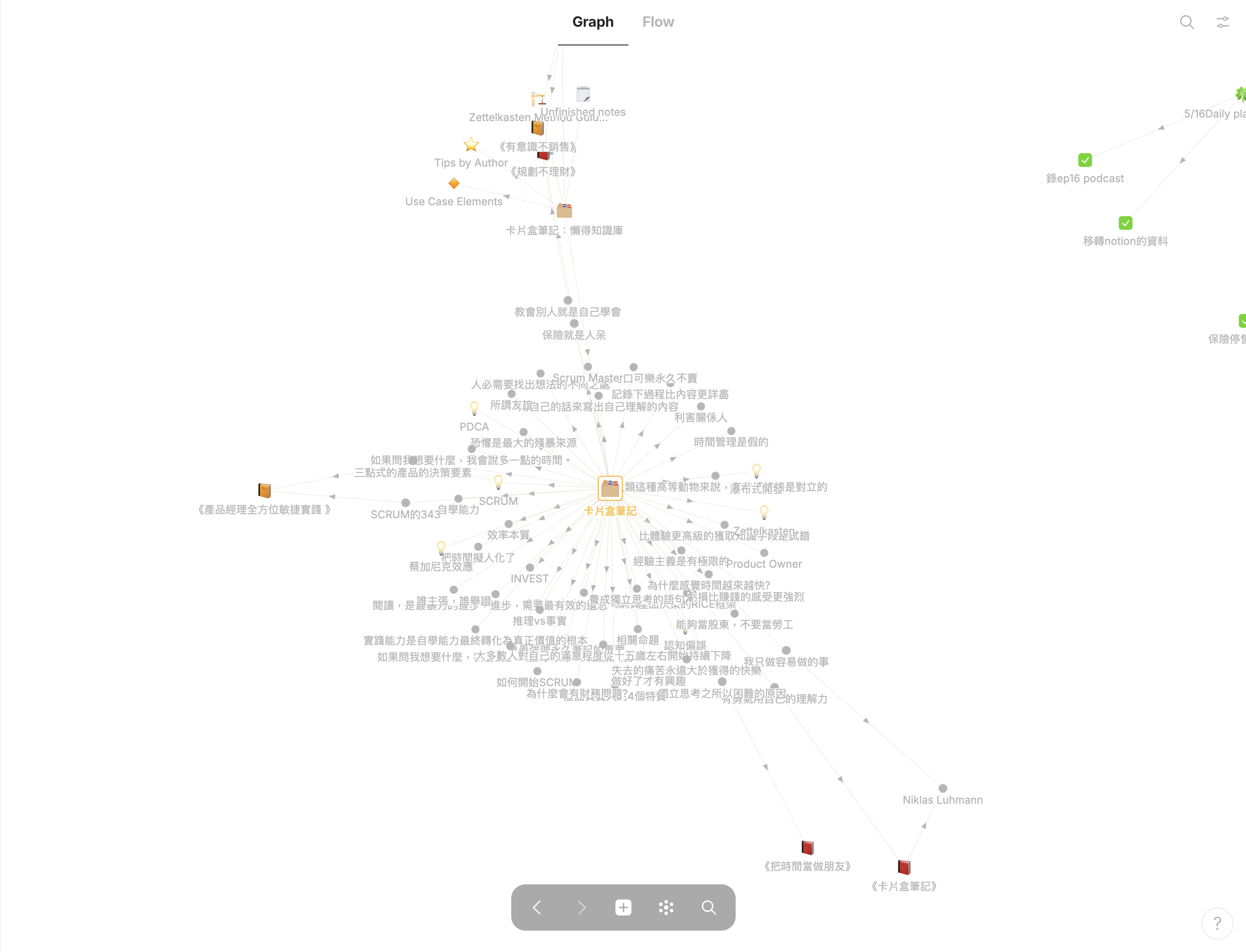
My personal Zettelkasten relationship graph after 2 weeks of practice
Further Reading
Lazy Da’s Conclusion

🚀 已有 1,000+ 讀者加入理財成長之路

Buy the Book