閱讀心得
"Just Keep Buying" Review: Data Proves the Key to Wealth Isn''t "When to Buy" but "Keep Buying"
Stop arguing about "the poor should save, the rich should invest"! …
2024-09-07
5 分鐘 →
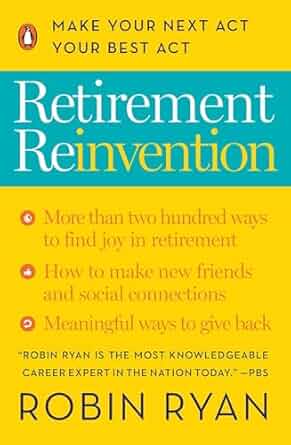
The core argument of Retirement Reinvention is clear: it challenges the traditional notion that “retirement = stop working and enjoy a permanent vacation.” Author Robin Ryan, an experienced career counselor, argues that in an era when human lifespans have extended dramatically, retirement should not be a passive endpoint but an entirely new life stage that requires active engagement and thoughtful “design.” The entire book revolves around one central idea — psychological planning must take priority over financial planning — guiding readers to explore the passions and purposes of the second half of life, and providing concrete strategies to turn retirement into a “project” filled with meaning and vitality.
When you hear the word “retirement,” what image comes to mind? Sleeping in every day, leisurely spending time with grandchildren? Finally being free from work to embark on a round-the-world adventure?
Those are beautiful visions — but what if I told you that treating retirement as a “permanent vacation” is actually a dangerous trap?
I recently read Retirement Reinvention by renowned American career counselor Robin Ryan, and it completely upended my idea of retirement. It reminds us that today, with average lifespans growing longer, twenty to thirty years of retirement without a plan can quickly turn from a dream into a nightmare.
The book’s core message is: retirement is not the end of work — it’s the beginning of Life 2.0. It needs to be actively “designed” and “reinvented” like a project. Today I want to share three key ideas from the book that really resonated with me, to help us build a meaningful, purposeful, and vibrant second act.

We spend half our lives planning financially — saving for retirement, buying insurance, researching investments… but author Robin Ryan cuts right to the chase: psychological planning is far more important — and more critical — than financial planning.
Money can solve practical problems, but it can’t fill an inner void. When you set aside your job title and leave the familiar office behind, what’s left?
The book poses two “soul-searching questions” you must ask yourself repeatedly before retirement:
These questions sound simple, but they force us to face ourselves honestly. When we’re no longer “the manager at Company X” or “the expert at Department Y,” what is our identity? What activities do we want to use to define our days?
The author argues that only after thinking through these two questions does all subsequent financial and life planning become meaningful. Otherwise, you might save enough money but still be “defeated by retirement” — feeling emptier and unhappier than when you were working.
Based on the author’s extensive counseling experience, many people struggle to adjust after retirement — not because they lack funds, but because they step into these hidden traps:
This is the most common misconception. Doing nothing at first might feel wonderful, but after a year or two, when the novelty wears off, a life with no goals or purpose will quickly drain your vitality. The author emphasizes that humans need “meaningful activities” to experience achievement and fulfillment — pure leisure gets boring fast.
“Once I retire, I’m moving to the countryside to farm!” “I’m buying an RV and touring the island!” These are wonderful dreams, but never make impulsive decisions before experiencing them.
The book warns that many people sell their homes and move to entirely new environments without proper research or a “trial stay,” only to discover they can’t adapt to the lifestyle, social environment, or climate — and deeply regret it. Renting and living in a new location for a few months to experience it first is always the smarter move.
For many people, work isn’t just income — it’s the center of their social life. Once retired, former colleagues and clients scatter, your social world shrinks overnight, and loneliness sets in. That’s why intentionally building a social circle outside of work before you retire — through clubs with shared interests, community activities — becomes especially important.

Now that we know the traps, the next step is action. The book offers many concrete strategies — here are 3 action guides distilled from them:
Manage your retirement life like a “project.” Write down everything you want to try — whether that’s volunteering, learning a new instrument, or going back to school. Most importantly, before fully committing, test things out with a “minimum viable” approach. Want to open a café? Go work at one first. Want to be a ceramicist? Sign up for an introductory class. This saves you from investing too much time and money only to realize “this isn’t what I wanted.”
Retirement doesn’t mean never working again. You can find an interesting part-time role, launch your dream business, or transform a personal hobby into a new income stream. The key is to find the perfect balance between “work” and “leisure” — staying active and connected to society while still enjoying life.
Retirement is the best time to “reinvest” in yourself. Through travel, taking courses (there are many free online options now), and cultivating new interests, keep injecting fresh energy into your mind and life. Don’t let age limit your growth — continuous learning enriches your life experience and opens up more possibilities.
A lot of people assume retirement has to be tied to wealth — as in, “not working but still having money = retirement.” But what this book really wants to say is: retirement means having enough money, not a lot of money. More importantly, it’s about finding things to do — whether that’s earning a little more, learning a little more, or simply doing a little more. These are all things that need to be thought through when it comes to retirement.
We often spend our youth chasing money and indulging in pleasures, forgetting that when we’re older — when income decreases and physical energy declines — what else can we still do to maintain our passion for life?
Let retirement be an adjective, not a noun.
A legally mandated retirement at 65, 70, or retiring at 45 because you’re wealthy enough — these are all descriptions of a state, not definitions of a life. Don’t let retirement define your life. Define for yourself what kind of life retirement means.
In summary, the biggest insight Retirement Reinvention gave me is: a successful retirement is a carefully designed “reinvention project,” not a passive endpoint you wait for.
If you’re still 10–15 years from retirement, or if you’re already feeling lost about what retirement life should look like and don’t want your second half to drift by aimlessly, this book is absolutely worth your time.
And I’d like to ask you: have you started thinking about “Who do I want to be after retirement?” Feel free to share your thoughts in the comments below!
🔒 免費訂閱,隨時可退訂

📩 訂閱即送 · Lead Magnet
訂閱即送 「ETF 懶人投資工具包」(VT/VOO/QQQ/0050 速查表、投資前檢查清單、定期定額紀律表)。有值得講的才寄 · 隨時退訂。